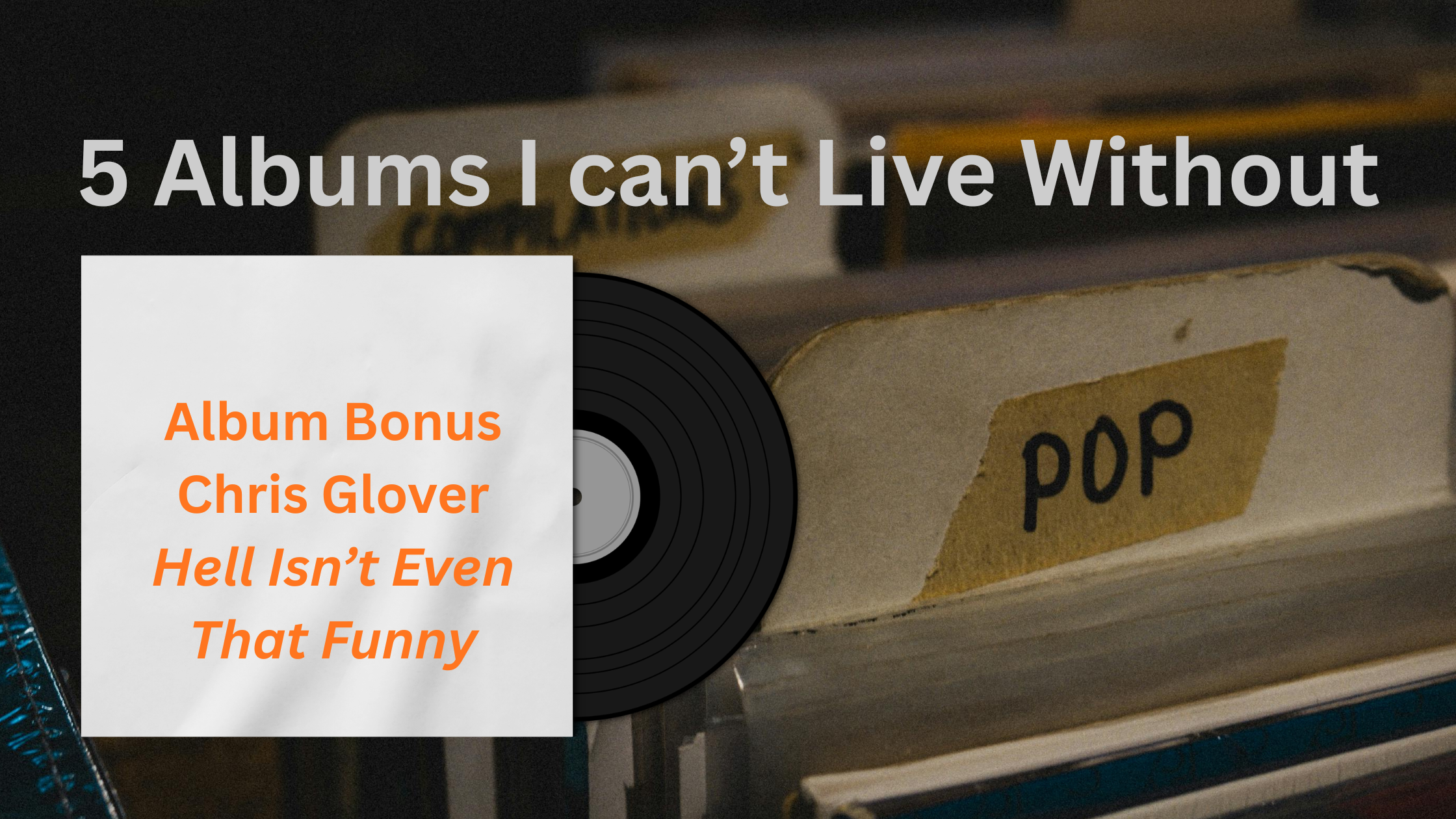
So, one of the biggest issues I had in choosing the 5 albums I can’t live without is selecting an album that was never officially released. When I was considering the idea way back in December, I thought of this album right away. Then I thought about you, the reader / listener. Would it be fair to include an album you would not be able to listen to if you wanted. I decided it was not fair, but, this is my blog series, so I get to have a bonus entry and give the album its props!
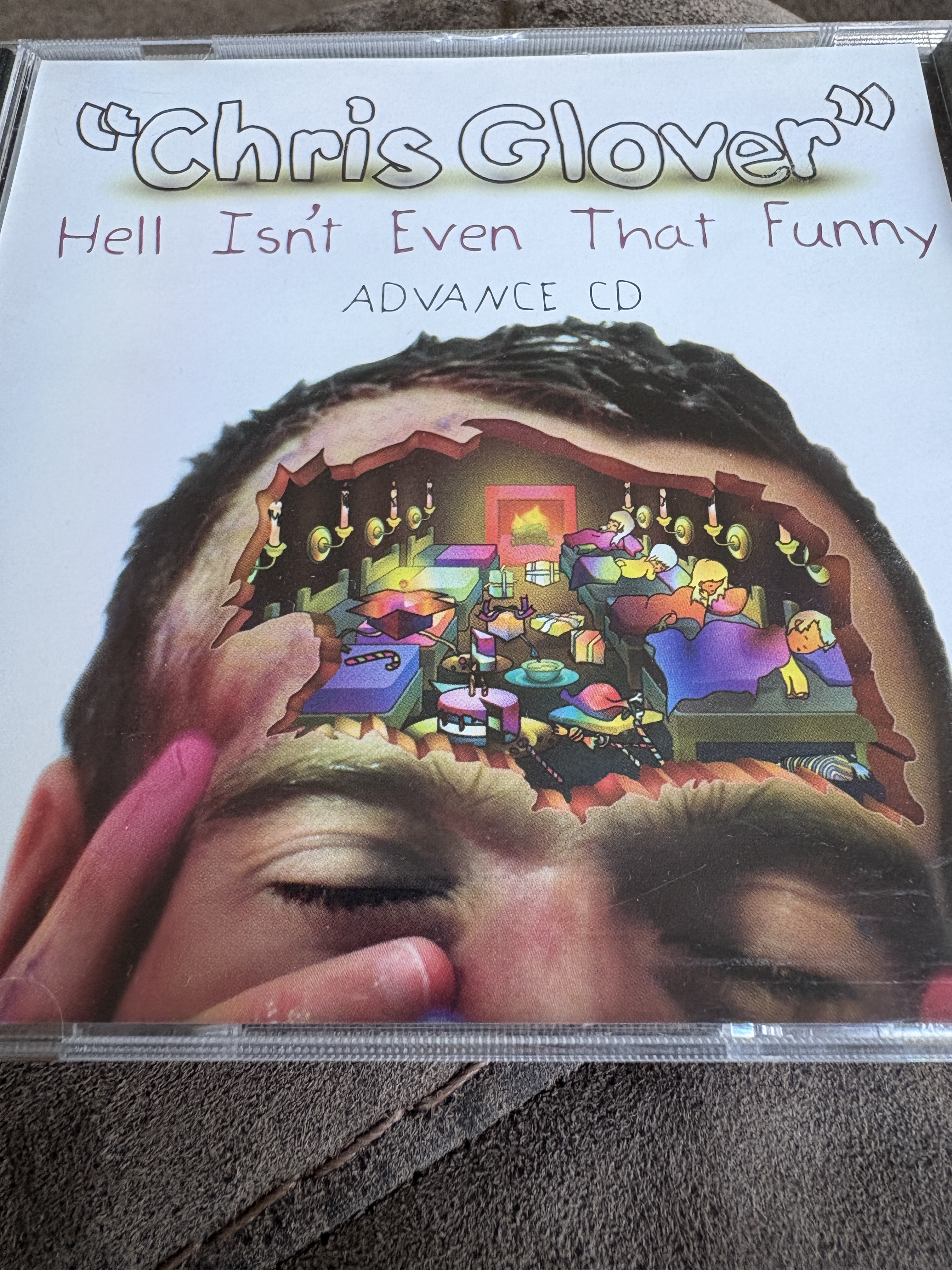
Hell Isn’t Even That Funny was supposed to be Chris Glover’s debut release, but the record company shelved the record, even though they released the single, “Stand On Your Seat” in 2005. I was hooked the first time I heard the song, but couldn’t find the album until I went to eBay and found an advance CD for sale. At that time, I just assumed the album was coming out later that year. I almost passed on buying the CD. I didn’t know at that time the back story. I am so glad I didn’t.
Chris Glover is now known as Penguin Prison, and is making awesome music. But this album is genre shattering. It mixes electronic music with hints of rap and pop sensibility. Chris’s lyrics make you think, are bluntly honest, and uplifting.
If you ever get the chance to hear this album (I found two copies available by private sellers) check out the songs, “Never So Far Away”, “Nothing’s Ever Gonna Change”, and “Something You Already Knew.”
If I was on a desert island, I would grab this album… well at least one of the burned copies I made of it, because it is truly one of a kind.
P.S. Below is the interview I got to conduct with Chris Glover for The Creative Moment podcast.
The rule that I could only choose one album per artist makes for a unique challenge for me. Many of my favorite bands have a number of albums I love. But the idea, too, that I couldn’t live without it helps, especially with the artist for album 2; Tears For Fears and their album The Seeds of Love.
This selection is also an example of connecting to an album the more you listen to it. How an album can age well, like wine. I remember not being blown away by the album in 1989, but I was a senior in high school, getting ready for college, all that stuff. Honestly, I didn’t really get into the album until after college. And I think part of the reason is because of the depth of themes of the songs, as a teenager I didn’t really connect to them like I could after growing up some and experiencing life.
The album starts with what I feel is one of the saddest songs of all time, “Women in Chains.” Because this post is about the music, I’m going to let the song speak for itself.
The second song on the album is “Badman’s Song” and I love when it comes on my playlist while I’m walking. The backstory is that during the tour for The Hurting, Roland Orzabal overheard some of the band members talking bad about him. The third line seems to indicate the hotel room they were in, “Well here’s to the boys back in 628.”
But I love the musical trip the song takes me on, and the underlying idea of hope for the badman. The references of faith and life lift my heart.
Many of the songs on the album run over five minutes, yet the songs don’t drag. “Swords and Knives” runs just over 6 minutes and is heavy with instrumental movements that create the perfect accompaniment to the theme of the song about violence in the world. And it transitions into one of my favorite songs of all time, “Year of the Knife.”
The track is high energy, and for me, poetic. I love the lines, “They say his famous final words / Came from the heart of man.” Plus the symbolism of love as a knife, played against the “young gun” is cool.
I’ve written about the final track, “Famous Last Words” in the post “Thank You, Tears For Fears” during the COVID pandemic. The track is a perfect ending to a great album. I love the thread of love throughout the album and the depth of the songs. This is an example of how music can grow with us, if we keep listening.
I got to interview one of my favorite musical artists, Chris Glover, on an episode of The Creative Moment podcast (YouTube video below). He is now known as Penguin Prison, but I have been a fan of his from the beginning of his career. So, it was an honor to get to talk with him for the podcast.
But now… I am jealous of him.
At about the 27 minute mark in the video I ask Chris what is his main drive as an artist, what was his WHY for creating music. I totally understood his answer. Chris said “I basically can’t do anything else.”
Chris didn’t mean he didn’t have the skills to do anything else, he expanded on the answer talking about how life would be easier with a normal job, but that wasn’t him. Chris is a musician, a creative person. This is what he does.
Chris is living out his life through his music. That’s why I am jealous. To live life by surrendering to my writing would be incredible. But that is the central battle of many artists, especially ones like me that have built families and careers. I have written about this balancing act before (“It is hard to reach your goals“). And make no mistake I would not give up any aspect of my life as a husband and father to be a famous poet / writer.
Doesn’t mean I can’t be jealous of Chris though, and I believe his music reflects that surrender to his music. You can feel the joy and authentic energy in his songs. It is one of the reasons I am a fan. His music is not like any other musician’s.
I am jealous, but I am also inspired by Chris Glover. Even more so after getting the opportunity to talk with him. I am inspired to write the poetry, the blog, the stories only I can write.
In fact, the chorus of Chris’ first ever single “Stand on Your Seat” makes more sense to me now:
I wrote almost 300 poems in the time between the books. While Death Waits has only 62 of those poems. I have written about 100 blog posts in that time. Produced 7 seasons of my podcast For Love of Lyrics (season 8 in the works). And my son and I have done 40 episodes of The Creative Moment podcast. Been a guest on Dr. Michael Ingram’s Quintessential Listening: Poetry Online Radio podcast twice. I have also been on Josh Grant’s Diabolic Shrimp show, twice!
I also taught poetic lessons for Move Me Poetry for their Teach Me Tuesday event. I have competed in two slam contests. Attended a handful of open mics in town (they have suspended the open mic nights for now).
And nothing has really changed.
Why am I sharing this info with you? Two reasons.
The first is I am honored to have done so many cool things. To meet people like Dr. Michael Ingram and Josh Grant. To build community with the poets at Move Me Poetry.
I have strengthened my poetry by stepping out of my comfort zone by competing in poetry slams and designing lessons.
I have been able to have deep conversations with my son and share my love of lyrics with people through podcasting.
I have written some cool poetry (yes, this is a plug for my book).
But I wouldn’t have done these things if I wasn’t chasing a dream. My life is richer because of my pursuit of being an author, being a poet people recognize.
But that is also the second reason I am writing this blog post. Nothing has really changed. I am still basically an unknown poet, unknown writer. Chasing dreams is hard. It challenges your convictions. Calls forth doubt like a sudden winter storm that draws out tears like slivers from your heart. The weight of fear and frustration wears me down, so I write about it…
which spurs me forward in chasing my dream of making a difference in this world with my words and leads to opportunities that I would never have if I didn’t chase this dream.
I’m excited to see what will be next… of course, I’ll write about it, so stay tuned.
A few weeks ago I attended an online education conference. The keynote speaker shared some information that got me thinking. He said that the use of the word “Love” had been decreasing in music. He did not provide any reference for this information. I tried to find a source to collaborate what he said. I couldn’t, but it still got me thinking because I use pop culture in my classes to make connections for the students. So, I decided to do an unofficial analysis of the top three songs from 2020, 2010, 2000, 1990, 1980, 1970, 1960, and 1950 according to Billboard’s Year End Hot 100 chart. I thought the top three songs from the years listed would give a good snapshot of what was popular at that time.
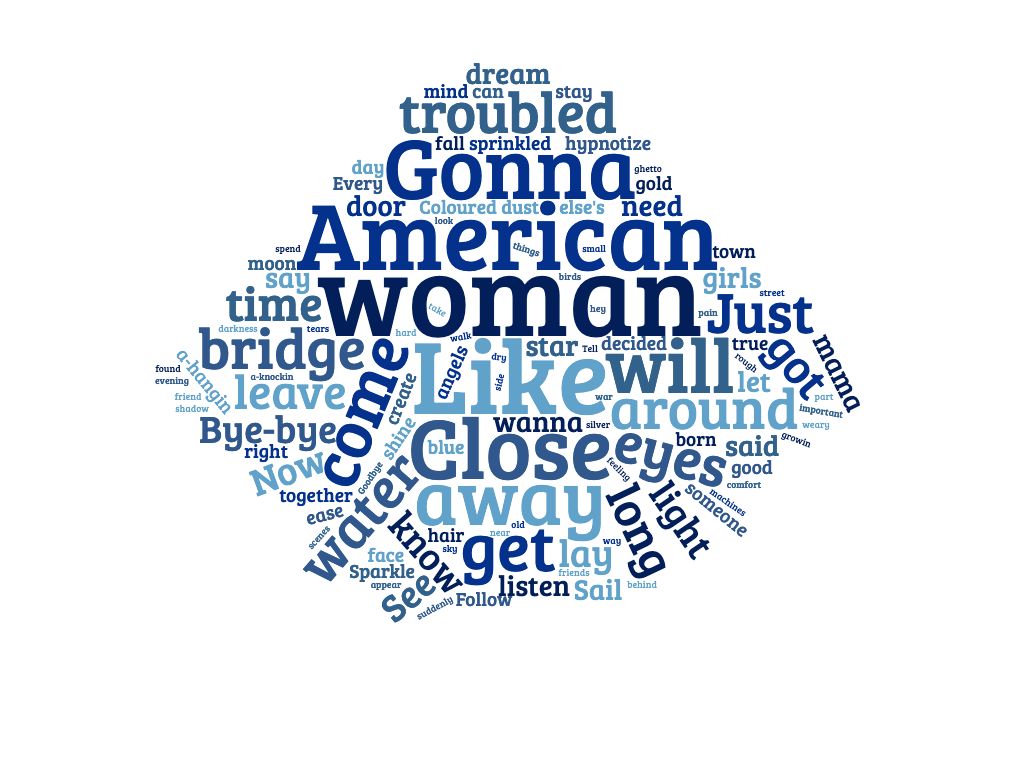
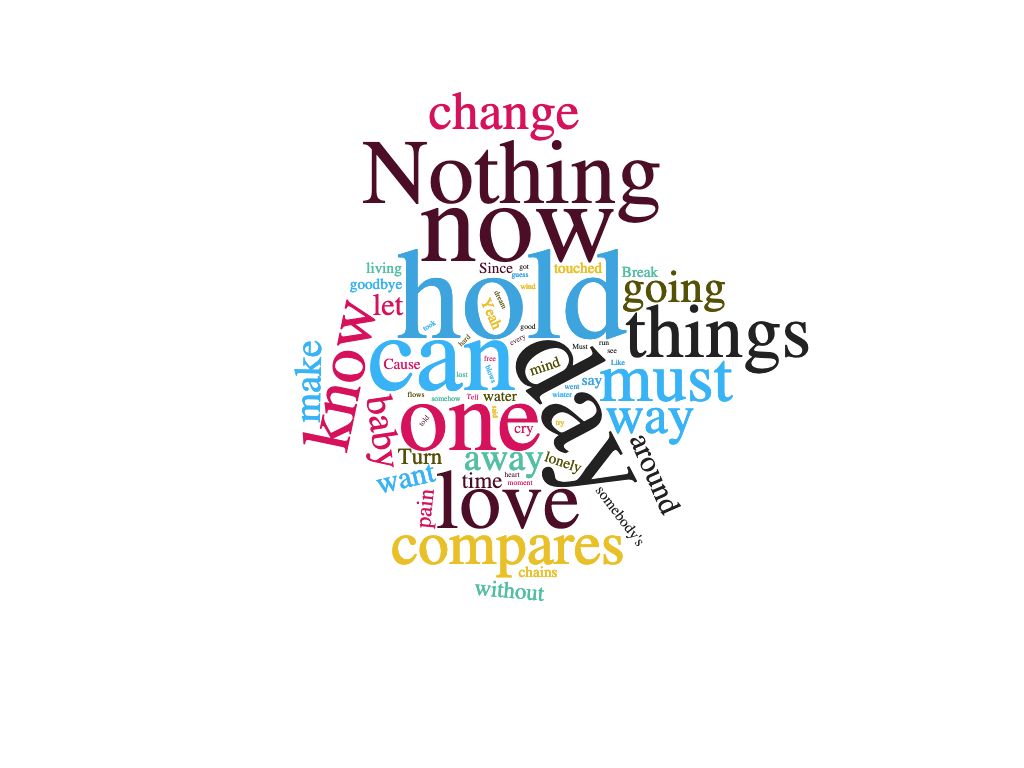
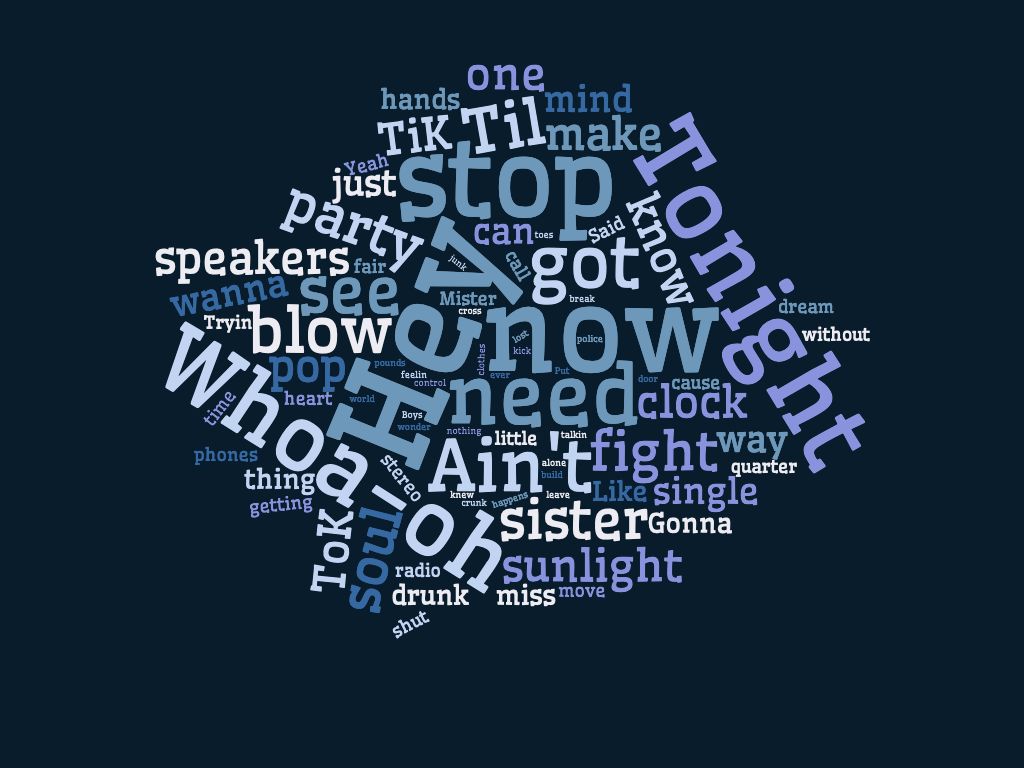
I created word clouds from the lyrics of the top three songs for the year. The most used words are larger in size. Stop words were automatically deleted (this was a challenging decision because these words were used in titles, but using them cluttered the word clouds). I removed all words that only appeared once in the songs. I’ll start with the word cloud, list the top three songs, and then share my insight briefly. Again, this is an unofficial look at these songs, but it is worth thinking about. Let’s start with 1950.
1950
1 . “Goodnight Irene” by Gordon Jenkins & The Weavers
2 . “Mona Lisa” by Nat King Cole
3 . “Third Man Theme” (Instrumental) by Anton Karas
It is obvious that names are the most used words in this word cloud, especially since one of the songs was an instrumental. “Lovely” does appear in the list.
1960
1. “Theme from A Summer Place” by Percy Faith
2. “He’ll Have to Go” by Jim Reeves
3. “Cathy’s Clown” by The Everly Brothers
“Love” is a main word, but not the most used. The overall feel of the word cloud is about relationships. I find it interesting that we have a name again as a main word.
1970
1. “Bridge Over Troubled Water” by Simon & Garfunkel
2. “(They Long to Be) Close to You” by The Carpenters
3. “American Woman” by The Guess Who
This word cloud is tough to get a general feel for because the top three songs are so different in theme and style. The word “love” does not show up in any form.
1980
1. “Call Me” by Blondie
2. “Another Brick in the Wall, Part II” by Pink Floyd
3. “Magic” by Olivia Newton-John
Knowing the songs, I was surprised that the words “brick” or “wall” were not more prominent. But “love” appears as a main word again, even with such a diverse group of songs.
1990
1. “Hold On” by Wilson Phillips
2. “It Must Have Been Love” by Roxette
3. “Nothing Compares 2 U” by Sinéad O’Connor
These songs had a similar vibe, which actually made for a smaller word cloud. “Love” is present now in three out of five word clouds, four if you count “lovely” in the 1950 word cloud.
2000
1. “Breathe” by Faith Hill
2. “Smooth” by Santana featuring Rob Thomas
3. “Maria Maria” by Santana featuring The Product G&B
“Love” makes it into the word cloud (I did not place it in the center). Funny how Santana owned the year 2000, his name is a prominent word in the word cloud, too.
2010
1. “Tik Tok” by Kesha
2. “Need You Now” by Lady Antebellum
3. “Hey, Soul Sister” by Train
This word cloud is filled with a variety of words, but “love” is not one of them. The songs range in topic and style, which presents a mumbled visual. I did notice that there are now words like “drunk” and “party”. Not that these words have never been in a song before, but these are the top three songs for that year.
2020
1. “Blinding Lights” by The Weeknd
2. “Circles” by Post Malone
3. “The Box” by Roddy Ricch
“Love” makes it into the word cloud, but what you don’t see in this visual may be of more importance. This is the first word cloud that I deleted derogatory terms and the F-word.
This is an unofficial look at the lyrics of popular songs. It is by no means meant to make a blanket statement about music or our culture. But it is worth thinking about because words have power, and our kids are singing these songs, making TiKTok videos to them. Pop Culture delivers a message to our society. Songs are part of that message. What are your thoughts on what you see happening with lyrics over the decades?
“Closer to the Edge” 30 Seconds to Mars Can you imagine a time when the truth ran free?
The birth of a song, the death of a dream
Closer to the edge
This never ending story
Paid for with pride and fate
We all fall short of glory
Lost in ourselves
No, I’m not saying I’m sorry
One day maybe we’ll meet again
No, I’m not saying I’m sorry
One day maybe we’ll meet again
My students will not be surprised at my analysis of this song and its connection to life. This song has been my summer song, not only because me and my second son dance to it in the kitchen, but it just hits a vibe with my life. The line about the birth of a song but connected with a death of a dream reveals the cost of change. Changes in our life hold both constructive and destructive powers.
Many people forget the lines “I shall be telling this with a sigh / Somewhere ages and ages hence:” from Robert Frost’s poem, “The Road Not Taken”. The rest of the poem deals with choosing the path less traveled, but these lines are ambiguous about the true benefit of that choice.
As my fortieth birthday approaches, I look back at all the roads I traveled. And the ones I didn’t. I have to wonder how I got here, did I make the right choices? Was there truly any other paths to follow? The question of Fate has no easy answer, I love when we cover the book The Natural and dissect the theme of fate presented in the story. I try to let the students work with their own views of this complex idea. Because I can not answer them, I can only live closer to the edge where the choices are to be made, knowing that each choice will open one door and close another.
As the video asks, Are you ready? I say bring on the next 40 years…









 It is all Connected