I have been working too long with technology. As I consider deeper aspects of life, computer metaphors come to mind. I have been working with my own default settings.
What I really mean is our basic response to life. In coach talk it is like muscle memory for sports but for life it is those response we do without thinking. And honestly, most of the time those responses are negative. We get home from work and we want to relax but life challenges us with something and we become snippy. Or we see that person, a colleague or student, we just don’t get along with and we start thinking some negative thoughts about them. A default setting kicks in.
I am working on mine. To be honest, I am trying to make my default settings reflect love. Not the Care Bear, “let’s all hug” type, but the basic strong and understanding love that allows me to build strong bonds with people in this life.
As a parent I get to test this new setting out every night right now. My youngest daughter is getting out of her bed at least three times a night. She makes her way into our room, sometimes crying, sometimes silently until she asks for me. Any parent will agree this is one of the toughest parts of parenting. Being awaken when you are finally sleeping well. I have not always handled this well; especially on the third or fourth or firth time she finds her way to our room. My default setting has been negative.
But I am working on that. I breathe in, checking my attitude, and hold my little girl as she drinks some milk. I gently put her back into bed, cover her and check on her sister to see if she needs her blanket adjusted. In a few minutes I am back under the blankets, still hoping that that was the last trip of the night, but knowing that I didn’t snap at her, or infuse the situation with a negative vibe.
It is not easy resetting the default. Like a computer or iPad, you have to go into the settings and adjust things. But if you do spend that time making the adjustments, the computer or iPad ends up working so much better for you.
So it is in life. Spending time working on our default settings can make this day work so much better for us.
Last week I had a great opportunity to conduct a workshop with Central Community College professors.
My oldest son went to the driving range with me on Saturday and my second son was my caddy on my last round of golf.
My wife and I took our two little girls grocery shopping with us on Thursday and we took the three oldest kids back-to-school shopping on Friday.
Some days at work I spend the whole day on one project, and yes sometimes it feels like I am playing with a new toy.
What do all these examples have in common? Time.
The professors commented that they never got the time to actually work on things. Something I also hear from teachers at workshops.
As a dad and husband, nothing says “I love you” like spending time with family.
As I have mentioned before, my job gives me time to explore new tools to use in my classes or to show to other educators.
Time.
Time is used differently in school, especially high school. It is separated into chunks by the ringing of a bell. And every teacher has had that bell interrupt a great lesson.
Everyday life makes us feel frazzled at times. I can feel exhausted at the end of a day when I don’t actually get much done. The worst part is that my attitude can then affect the rest of the family in a negative way, and if I’m not careful it becomes a habit for the household.
Time.
Life takes time. Learning takes time. People need our time (especially those we care about the most). We all get 24 hours in a day. But do we use those hours for the best? Time for our students to think? Time to share a joke at the dinner table? Or to just sit with the person you love and watch the sky fade to night, happy with how you spent the time given to you?
On the fourth of July the three older kids had spent the previous night with their aunt and uncle. My wife and I had the two little ones and we met at a small community pool near the in-laws. It was a good afternoon. The pool allowed us to hold the little girls as we went down the curvy slide. Yep, I think we had to go down that slide at least a hundred times.
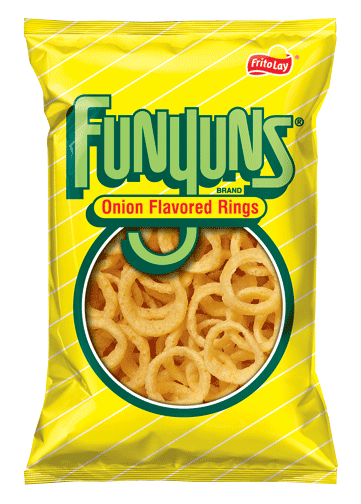
On the way out of town we stopped to get something to drink and a snack as we headed to the in-laws for the rest of the fourth of July. My wife and I still had the two little ones, so I ran in to get the stuff. My wife had asked for a Pepsi and something salty. I wandered around the trail mix and peanuts, and then saw on the bottom shelf of the chip sections, Funyuns. One bag left.
As I carried the stuff to her window she broke out in a huge smile. As we drove to the in-laws we all enjoyed the bag of Funyuns. The little girls would ask for “nother one Mom” as they chomped on the one in their hand. The airy onion-like rings were perfect.
Both my wife and I love Funyuns, but it is not a snack we buy often. It is such a different snack that we usually opt for something more traditional when we are shopping. Why? As I stood in the aisle looking at the bag I debated if I should grab them. Even though I knew my wife and I enjoy them, it was still a risk. But the risk was stepping out of the safety of a routine.
Funyuns themselves are just different. The taste is not quite onion. The texture is fun, and the shape is supposed to be round, but you never get too many perfect round ones. They are different. And that is good.
Life just gets into routines. We feel safe in that routine, and sometimes we sacrifice what we like for safety. Be it from ordering the same dish at a restaurant, to squelching that impulse to be spontaneous because we do not know the outcome. Ironically, we know we would enjoy a different dish. We feel that spontaneous desire for a reason. So, I challenge you today to go ahead and buy that bag of Funyuns. Because I bet you will be like my girls and you will want “nother one.”
Reading the book Too Big To Know, by David Weinberger, was one of those moments that helped me see something I already knew in a slightly different light and that sparked a whole new train of thought. I love these moments.
The book is a look at how the Internet is changing the view of knowledge. I highly recommend the book, but I want to discuss the most obvious point from the book. Abundance.
Courtesy of Cornell University Library from Flickr
As David Weinberger points out, we have had an abundance of information for a long time. Have you read every book in your local library? Have you read every book you have bought or downloaded? Neither have I. What the Internet does is make that abundance faster and in different forms: articles, videos, apps, music, and opinions.
School is out for the summer, so I’m going to approach this idea from a dad perspective. Through this example I hope to express how abundance can be a great thing for learning.
Question, what does “Wake Me Up Before You Go-Go,” the 2012 Eastern Conference Finals, Yoda, and a Tom Brady rookie card have in common? Answer: My sons and how they come to find interest in things.
My two sons are 11 and 9 right now. And because of the abundance of the Internet and technology, I have been having a blast sharing my interest with them. One example is music. Right now my oldest son is into Harry Connick Jr. and 80’s music, while my other son is listening to the songs “Good Life” (One Republic) and “Believe” (Cher). They use Grooveshark to create playlists to dance to, or to have as background music as they play animal tag with their sisters.
My oldest son’s interest in 80’s music comes from the video game series, Just Dance. His interest in Harry Connick Jr. comes from the movie, Dolphin Tale, which Harry Connick Jr. has a role in. I have some of his CDs, but my son has been checking out other CDs from the library.
When my second son bought his iPod, I put some music on it he might like. The music on his iPod has grown from his own interest and suggestions from me. One of our favorite songs is “Closer To the Edge” by 30 Seconds to Mars.
We cheered on the Celtics (I am a Kevin Garnett fan) in the Eastern Conference Finals together because of trading cards and the NBA 2K11 video game. My second son’s favorite basketball player is Shawn Kemp, who he has only seen play on YouTube videos and the video game. He does have a few of Shawn Kemp’s trading cards.
We watched the Super Bowl because they have a Tom Brady rookie card. I’m a Minnesota Vikings Fan, last season was a tough one.
They don’t like everything I share with them, but what is incredible is the ability to share aspects of my life with them. And to share the original content, not just a story. My music collection is not unpacked yet, so I use Grooveshark to share a song they might like. Then if my second son wants the song we can buy it from iTunes. When my oldest son got the part of Winthrop in TheMusic Man last September he used YouTube to study the role.
The abundance we have can be a powerful aspect to our lives. Yes, there are some negatives, but that is for another blog post. My sons’ and I are building strong connections because we can share and experience life in a completely different way than before. History is important and powerful. Shawn Kemp is my son’s favorite player. He has never seen him “play.” But he knows a lot about him, plus he understands the history of the Oklahoma City Thunder (who he is cheering for in the finals because they use to be the Super Sonics) because of his interest.
When embraced, this abundance we have can allow us to naturally learn anything that interest us. It can build connections; between people, between today and yesterday, and even between who we were and who we can be, because it allows us to explore and investigate life in ways we couldn’t before. It gives me an opportunity to be a better dad, to be able to enrich my children’s life with more than just stories. I can share my history sometimes in its true form today.
I remember when “Wake Me Up Before You Go-Go” was a hit in 1984 and have shared stories from that time in my life with my boys. Today, the song is just as important because it makes us excited when it is one of the songs for the dance battle on Just Dance 2 (yes, I have won on that song a couple of times).
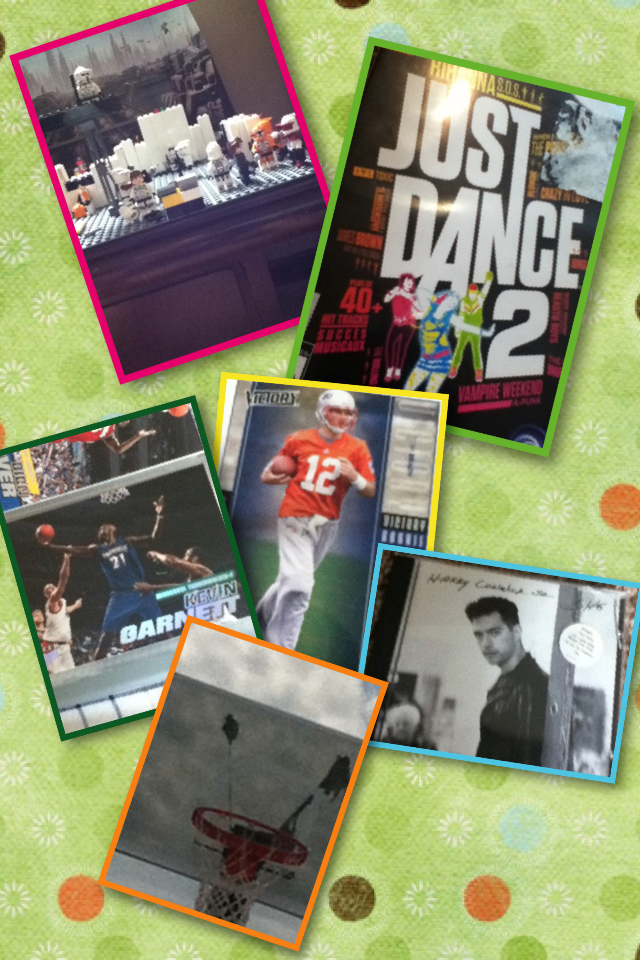
A Pic Collage of Interest
P.S. My second son made the collage this morning at home while I am at work. Connectedness, but that benefit of technology is another blog post.
Saturday morning I was working on cleaning the kitchen, getting recycling organized, cleaning counters, stuff like that. The house was in full child mode, the older three were downstairs doing something that made a thud every few minutes. The two youngest girls were in the recliners, movie on but their attention on the books in their laps. My wife was getting ready for the day.
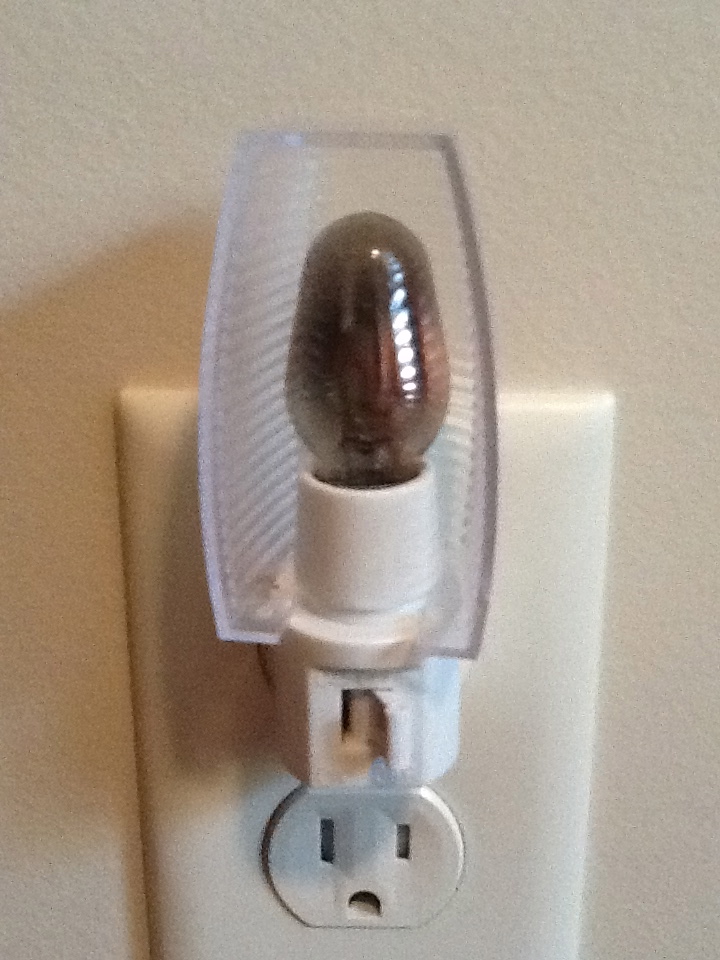
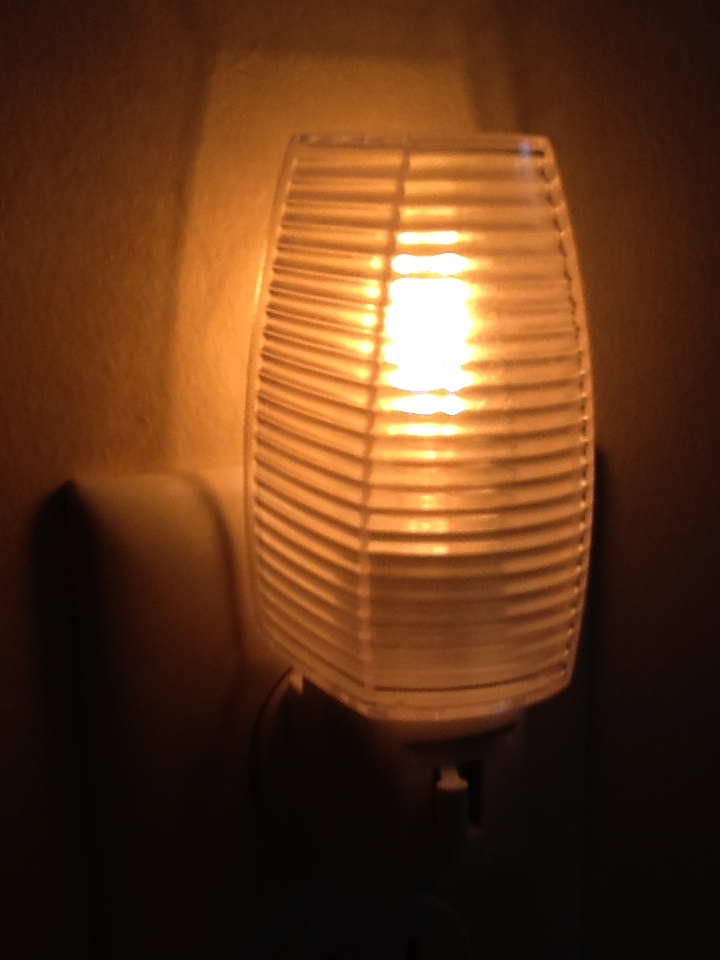
I had started on the clean dishes in the dishwasher when my second son said, “Dad, I hit my nightlight and now all the lights downstairs don’t work.”
What?, I thought. And I felt the knee-jerk reaction of parental frustration start forming in my head with the words already on my lips. I don’t know why, but sometimes life gives us a moment to learn from, and I gave myself a few moments to think by saying, “OK, what happened?” in a calmer tone. Just under the frustration a thought had pushed through, if I wanted my son to continue to talk to me when things happened, when he might have made a mistake, then I had better pay attention to how I handled this situation.
By bumping his nightlight he threw the breaker for that part of the basement. Not a big issue, I switched the breaker back on and changed the light bulb in his nightlight. Problem solved. But I haven’t always handled simple situations with calm; too many times that knee-jerk frustration sets the tone for that moment. I realize I need to change that habit. If my son has a problem and he gets negative responses from me every time, even before I have figured out what is going on, then he will simply stop coming to me for help. I don’t want that to happen.
We teach people who we are by our habit of response. And they will act accordingly. As I thought about how we influence students I thought of one of the most patient and strong colleagues I have worked with, Mrs. Moss at Centura. Every morning she was helping students with math problems. Every morning! They knew she would be there for them, they could ask their questions and know she would help them. Mrs. Moss’ habit was to smile and say, “Let’s look at that problem.”
I hope to be as good of a teacher and parent as Mrs. Moss, to create a habit of response that lights the way to a positive reaction to the situation instead of a knee-jerk negative comment.
My two little girls were excited this morning to go to daycare. Fridays are show-and-share days and they had something cool to show today. Snap bracelets. I gave the girls the snap bracelets last night. The girls had no idea how they worked until we showed them.
I brought out the bracelets straighten out, then held my girls’ hands and then snapped the bracelet on to their wrist. They responded with a wide-eyed expression that then turned into laughter. My youngest hollered, “Again!”
For the next five minutes my wife and I snapped the bracelets on our daughters’ wrist, on our wrist, and of course even the older ones had to get into the fun. The girls soon wanted to snap the bracelets themselves. My youngest had a tougher time getting enough force behind her snap to get the bracelet to curl around her arm, but she did get it a few times.
My second daughter, though, took off with it. She had it on her ankle, “Look daddy, look at the lizard on my foot!” She had it on her upper arm; she was snapping it on her brothers’ wrist. And she had to take it to bed with her.
This morning they had their snap bracelets on and excited to share with their friends at daycare.
As life does, it got me thinking about education. Without getting too bogged down with deep issues, the snap bracelets are a great example of learning. When my girls were presented with the bracelets they recognized the animals, but did not understand the apparatus the animals were sitting on. We “told” them what it was. They still didn’t totally understand, but they knew what jewelry was and this didn’t look like a bracelet. Then my wife and I demonstrated how it worked. It was the coolest thing they had seen. My girls understood, but weren’t ready to do it themselves, so we demonstrated for a while then handed the bracelets off to them to play with.
Now comes the powerful aspect. My youngest daughter could make it snap once and awhile, but she still needed assistance. Plus, she only wanted it on her wrist. That’s were she is as a two-year-old. But my second daughter, almost a year and a half older, took off with the snap bracelet. Understanding the concept, she tested it out on her ankle, on her upper arm, on her siblings.
Isn’t that what we want in learning? As teachers we are there to show our students the subject matter (a poem, cell division, drawing perspective). We can “tell” them stuff, but once we show them how powerful the subject is, to practice the concept with them until we let them go to expand their own learning. To test the ideas out, to experiment with the concept, to create a new idea… to learn.
I have been moved to tears by two movies lately, but I will get to that in a moment.
I do not matter. Nobody really reads my blogs, or notices when I do not tweet, or update my Facebook status. This is my fist year without any coaching responsibilities, and I miss it, but the games go on. ESU 10 will not shut down if I am not there, or even if I move on. I do not matter on a grand scale. But I will get back to this in a moment.
One of the themes that connect the two movies is the importance of the everyday. The importance of finding the meaning in life by our everyday struggles. Whether we write poetry or work hard for our family. These two films express the why behind those struggles and relates the power we have to make each moment matter.
I do not matter, except to a few people, most importantly my family. I have made difficult decisions that I felt would be the best for my family. I strive to create a better life for my wife and children.
I matter to a few students. For all my failures, I have simply tried to empower my students to find their own voice. Have I succeed? Not all the time, not with all the students. But I have tried. Every day.
For whatever reason life has been reinforcing the idea that every day matters. For me, for you, for the people we interact with every day.
Dirty diaper dropped into the diaper pail. Clean diaper secured. I stand my youngest daughter up so that I can get her pants pulled up in a single motion. She looks at me, spreading her arms out wide. I mimic her move. A single second passes before she falls toward me, trying to wrap her arms around my shoulders with all her strength. Her little hands just reaching my upper arms. I return the motion with my own arms, wrapping her tight against my chest. A giggle escapes her and we release our hug. I set her down on the floor and she is off to her next adventure (usually hollering out her big brothers’ names to see where they went).
Every morning I get my three-year-old daughter up for the day. She grabs her blanket as I lift her out of the crib. She then finds her spot on my shoulder. Her head snuggled into my neck and she whispers, “I take care of you.” Almost everyday I have to just stand there and hold her, knowing too soon she will be able to get up on her own.
If we take the time, we can see and feel those small moments when others tell us they love us. If we take the time, we can create a small “I love you” with an action that is just a part of our everyday routine. If we take the time… the smallest thing can have the most powerful effect in our lives. Take the time.
(This video is for my beautiful wife… remember our concert date?)
Technology and education have been at the forefront of my thoughts lately. Last week I got to be a part of a school’s discussion on moving to 1:1 instruction with the iPad for high school students. The teachers shared their concerns, their fears, and their excitement.
I remember being at that junction when I was a teacher at Centura. Yes, as an English teacher I worried about the loss of the book. I wondered how my position as the teacher would be affected in the classroom. Years later, I find myself teaching from an office through technology only.
Yesterday, I got to teach my American Literature class from Centura. It was energizing to be in front of the students. To have the room filled with laughter, with questions, with that energy that comes from a group of people working and sharing. Today, I am back at the office getting the lesson plan tweaked so we can use Socrative during the class.
One of the themes we are covering in the American Literature class is education. We have seen how Frederick Douglass educated himself by tricking street kids in writing contests. Frederick Douglass understood that education was one part of his path to freedom from slavery. Ralph Waldo Emerson revealed in The American Scholar that true scholars hold a powerful responsibility to our world, to reveal truth. Emerson also states that if nothing else, a true scholar has the ability to live and by truly living we learn. My favorite poet, Langston Hughes, stated in the poem “Theme for English B” that,
The instructor said,
Go home and write a page tonight. And let that page come out of you— Then, it will be true.
I wonder if it’s that simple? …
…It’s not easy to know what is true for you or me at twenty-two, my age. But I guess I’m what I feel and see and hear, Harlem, I hear you: hear you, hear me—we two—you, me, talk on this page.
To simply state it; the message has been that true education is a reflection of ourselves and continues our entire lifetime.
But in class we are now reading The Street by Ann Petry. And the message has changed. The book expresses an idea that education is just something we go through to gain a better job that allows us to have more money. I’m not sure this doesn’t reflect what education is today.
And no technology will change that. As no pencil will change it either. Teachers have the power to change the view of education. And yes, tools like the iPad do empower teachers to make a difference, not just for the students, but also for their own love of learning. I’m excited as a teacher for the things I can produce with technology, like my own textbook, or a web app that will help my students learn.
So, why doesn’t my son get his iPod? Because he has been spending too much time with it and is in trouble of not making his A.R. goal this quarter. And it is my job to teach him the balance of using technology. As it is a responsibility of teachers to be that person who sparks real learning in students, as Langston Hughes writes,
I guess being colored doesn’t make me not like the same things other folks like who are other races. So will my page be colored that I write? Being me, it will not be white. But it will be a part of you, instructor. You are white— yet a part of me, as I am a part of you.
That’s American. Sometimes perhaps you don’t want to be a part of me. Nor do I often want to be a part of you. But we are, that’s true! As I learn from you, I guess you learn from me— although you’re older—and white— and somewhat more free.
Truth be told, education makes us free and connects us on deeper levels than any Facebook statues update could. At the heart of learning we become the best of who we are.
Emerson states in the American Scholar “Life is our dictionary.” What are we helping our students write in their life?
In a 2008 study, “What We Regret Most … and Why,” by Neal J. Roese and Amy Summerville, it reveals that our top three regrets, in order, are Education, Career, and Romance. The research basically showed that we regret those opportunities where we could improve our life and that most of our regrets center on what we could have done. Not on what we did.
But why do we let those opportunities go by, both the small and life changing moments?
This morning I helped drop off my children at daycare and school. My second son and oldest daughter rode with me to their school. We got there before my wife, so we sat in the car and they wanted to play our version of “I Spy Alphabet” game. My first instinct was actually to not play, to be quiet and wait. A small moment (by the way Parenting is number four in the above study)… that I didn’t let go. We got to the letter L and laughed the whole time. The rule is to name something you see as you go through the alphabet. My daughter kept hollering out random things. As my wife pulled up “LION!” filled the car.
“Where?!” I hollered in mock surprise. We got out of the car laughing.
But there are big moments, life-changing moments. My current position places me at the edge of change. Technology is always improving, changing, and education is the most powerful aspect I know that positively affects our lives (and the number one regret for people).
Courtesy of Centura Student Angelica
Later this week I get the privilege of attending a teacher in-service for a school that is working on the idea of going 1:1. Last week I got to speak, as a dad and teacher, about my view of technology in education. I am still finding my feet in regards to expressing my philosophical views with my job. Every teacher I have ever had in class or worked with had their own talents. Even though I work with technology all the time, one of my personal goals for my job is to help teachers be at their best. Technology or not. Because the classroom, everyday, is one of the most powerful places in the world. I am proud to be a part of that moment for students, teachers, and education in general.
Education is the number one regret people have… our most powerful regrets are those things we didn’t do, especially with things that would make our lives better.
This post doesn’t have any answers; it is simply a small moment I had to share with you. To maybe plant a seed for your next moment in life, big or small, to not regret it.