
I’ve been reading a few different books and one idea that has come through is that everyone is going through a struggle. It might be small or life changing but everyone we meet is dealing with something. And that struggle will change. So, I wanted to send a small message to you today. I’ll let the song speak for me.
Tag Archives: music
Abundance
Reading the book Too Big To Know, by David Weinberger, was one of those moments that helped me see something I already knew in a slightly different light and that sparked a whole new train of thought. I love these moments.
The book is a look at how the Internet is changing the view of knowledge. I highly recommend the book, but I want to discuss the most obvious point from the book. Abundance.

Courtesy of Cornell University Library from Flickr
As David Weinberger points out, we have had an abundance of information for a long time. Have you read every book in your local library? Have you read every book you have bought or downloaded? Neither have I. What the Internet does is make that abundance faster and in different forms: articles, videos, apps, music, and opinions.
School is out for the summer, so I’m going to approach this idea from a dad perspective. Through this example I hope to express how abundance can be a great thing for learning.
Question, what does “Wake Me Up Before You Go-Go,” the 2012 Eastern Conference Finals, Yoda, and a Tom Brady rookie card have in common? Answer: My sons and how they come to find interest in things.
My two sons are 11 and 9 right now. And because of the abundance of the Internet and technology, I have been having a blast sharing my interest with them. One example is music. Right now my oldest son is into Harry Connick Jr. and 80’s music, while my other son is listening to the songs “Good Life” (One Republic) and “Believe” (Cher). They use Grooveshark to create playlists to dance to, or to have as background music as they play animal tag with their sisters.
My oldest son’s interest in 80’s music comes from the video game series, Just Dance. His interest in Harry Connick Jr. comes from the movie, Dolphin Tale, which Harry Connick Jr. has a role in. I have some of his CDs, but my son has been checking out other CDs from the library.
When my second son bought his iPod, I put some music on it he might like. The music on his iPod has grown from his own interest and suggestions from me. One of our favorite songs is “Closer To the Edge” by 30 Seconds to Mars.
We cheered on the Celtics (I am a Kevin Garnett fan) in the Eastern Conference Finals together because of trading cards and the NBA 2K11 video game. My second son’s favorite basketball player is Shawn Kemp, who he has only seen play on YouTube videos and the video game. He does have a few of Shawn Kemp’s trading cards.
We watched the Super Bowl because they have a Tom Brady rookie card. I’m a Minnesota Vikings Fan, last season was a tough one.
Both sons like Star Wars; that started because of the Lego Star Wars games.
The boys have also seen the movies / shows, Hoosiers, Clue (thanks to my wife on this one), Searching for Bobby Fisher, and the original The Muppet Show just to name a few.
They don’t like everything I share with them, but what is incredible is the ability to share aspects of my life with them. And to share the original content, not just a story. My music collection is not unpacked yet, so I use Grooveshark to share a song they might like. Then if my second son wants the song we can buy it from iTunes. When my oldest son got the part of Winthrop in The Music Man last September he used YouTube to study the role.
The abundance we have can be a powerful aspect to our lives. Yes, there are some negatives, but that is for another blog post. My sons’ and I are building strong connections because we can share and experience life in a completely different way than before. History is important and powerful. Shawn Kemp is my son’s favorite player. He has never seen him “play.” But he knows a lot about him, plus he understands the history of the Oklahoma City Thunder (who he is cheering for in the finals because they use to be the Super Sonics) because of his interest.
When embraced, this abundance we have can allow us to naturally learn anything that interest us. It can build connections; between people, between today and yesterday, and even between who we were and who we can be, because it allows us to explore and investigate life in ways we couldn’t before. It gives me an opportunity to be a better dad, to be able to enrich my children’s life with more than just stories. I can share my history sometimes in its true form today.
I remember when “Wake Me Up Before You Go-Go” was a hit in 1984 and have shared stories from that time in my life with my boys. Today, the song is just as important because it makes us excited when it is one of the songs for the dance battle on Just Dance 2 (yes, I have won on that song a couple of times).
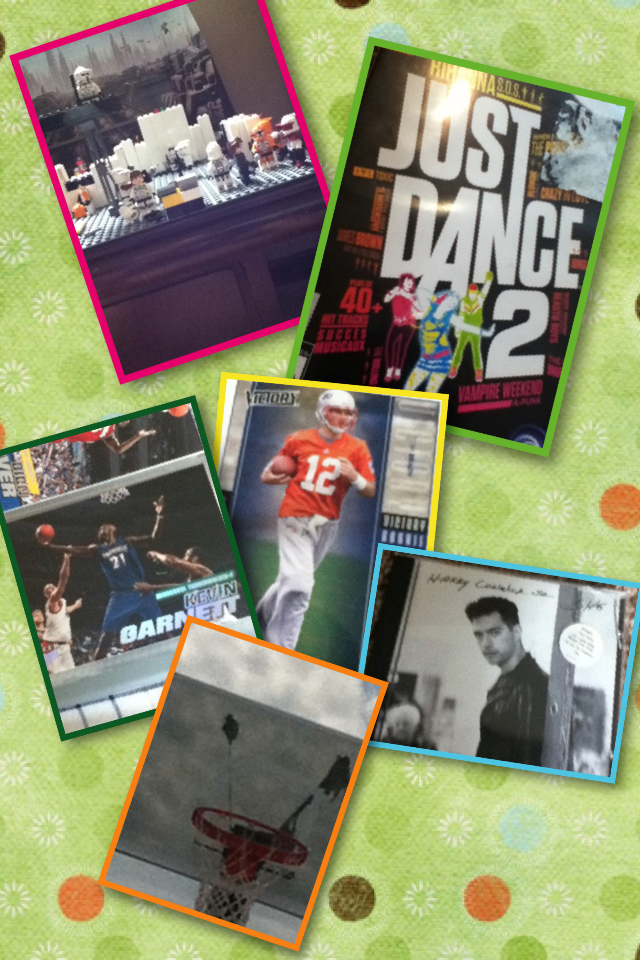
A Pic Collage of Interest
P.S. My second son made the collage this morning at home while I am at work. Connectedness, but that benefit of technology is another blog post.
Filed under Education, Family, Life, Technology
Sometimes…
Sometimes…
We need to watch the stars, to remind ourselves that there is a beauty to life we forget about.
Sometimes…
We need to hold our loved ones a couple of more seconds, to remind ourselves to feel the depths of love.
Sometimes…
We need to open our hearts a little more, to remind ourselves that risk takes us to deeper aspects of life.
Sometimes…
We need to be silent, to remind ourselves that life is filled with more than we know.
Sometimes…
Sometimes…
we just need to know that life is good even with the tears.
Filed under Life
Your Own
We have a hard rule in our house; you can’t say you dislike anything until you have tried it. Yes, it helps us to get the kids to eat their vegetables at dinner (there are some vegetables that are not served in our house, but it is because we have at least tried them), but the rule stands also for other issues. From Justin Beiber to reading The Chronicles of Narnia. We don’t let the kids just spat out other peoples’ opinions. Or to just dismiss something without at least knowing something about it so that they can form their own opinion.
This approach isn’t always easy, even as elementary students the playground conversation can get negative and degrading. I am amazed at times with the negative opinions my children express at the dinner table and the range of topics these opinions cover, from songs about Barney the Dinosaur (not happy songs!) to political issues. With just a couple of questions, I discover that the opinion comes from the playground. My wife and I then lead the discussion for them to express what they know of the topic. We help them to formulate what their opinion is based off what they actually know. Other times, sadly, we have to simply say, no that is not appropriate. Usually with songs they learn, but it still expresses an opinion.
As a dad, this saddens me in a number of ways. I actually enjoy helping them learn about the world. To discuss issues, to question them and yes, sometimes I over analyze things (did you know how many different themes are present in Disney’s Beauty and The Beast?). But when did this all become so negative? What is wrong with liking something? Why do we have to fight so hard to have our own ideas?
Why is our first reaction to something negative? As an English teacher this attitude is almost a cliché.

Courtesy of Flickr user piper caldwell
“I hate reading.”
“I hate poetry.”
“I hate English.”
I have no problem when a student says they dislike a poem, after they have read it. In fact, it means the poem actually affected them and gives me something to discuss with them.
What sadness me the most, and not just for my kids but for my students too, is the lost opportunities because of this attitude. The depth of our life is not created by others’ attitudes but through our experiences. And those experiences have to be both positive and negative. Those opposites give us the parameters to build our own views. To make this life our own.
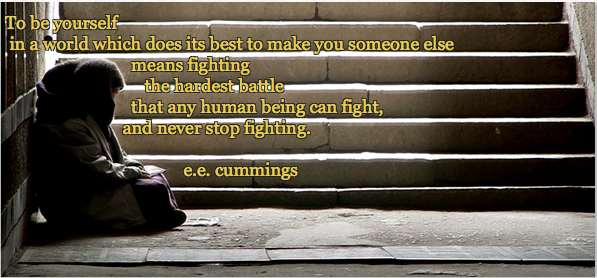
Designed at PicLits.com
Snowy Day
The snow cancelled basketball. The girls stayed in pajamas. I shoveled the driveway. It was one of those relaxing snowy Saturdays when you eat too much, we made sugar cookies, and you get the chance to spend serious family time. We had a great moment at the dinner table where we all were laughing so hard we were crying.
We read stories; a few of us took naps (yes, I was one of them). But technology allowed us to do some creative things.
My oldest son wrote a song, “There ain’t room for both of us” as a Christmas gift for his grandparents.
He is learning to play the clarinet. If you remember a past blog (“Miles Davis: So What”) you will recognize the similarities of the beginning of his song.
This day gave my other son the chance to make his first Lego movie, “ARC Troopers: Ambushed”
I helped with technical parts, but he was the director and producer. He had the script done, a staging map for the Lego men, and ideas for the sound effects.
These projects are not earth shattering, but allowed my sons to pursue things they are interested in or working on. This day gave us the opportunity to build memories that we can experience for along time.
I can’t wait for the next snow day…
Filed under Family, Life, Technology
Miles Davis: So What
My oldest son is learning to play the clarinet, and seems to be doing well. He makes sure he practices every day. Of course he learned to play a part of the Star Wars theme, which he likes to share every day.
So, I thought I would introduce him to Miles Davis. To expand his musical interest. To reveal to him some of the great artists, to show him how incredible music can be. To show him the deeper part of music.
It didn’t go well. Not that he didn’t listen with me, but he wasn’t much interested. I tried to get him to let the music speak to him, to feel the emotion behind it. He just wanted to be somewhere else.
I was disappointed. Over the last month I have been sharing movies with the boys that I watched when I was growing up. Both boys like some of my 80s music. I thought exposing him to Miles Davis was going to be a great moment. Why wasn’t it?
I started to wonder about all the times I tried something like this in the classroom. Sometimes it worked, other lessons failed. Why? I just assumed my son would like Miles Davis because he was learning to play an instrument. My son has no background knowledge about Miles Davis, hasn’t even heard him before. What did I expect? That he would just understand how great Miles Davis was.
As an English teacher I have fallen into that same trap, especially with literature. That my students will just get how awesome a book or poem is. I don’t want them to miss the opportunity to be moved by the literature, just like I wanted my son to feel the beauty behind Miles Davis’ music. Ironically, I become the barrier of that moment. Not in sharing the music, but by being the source of the selection. And worse, like with my son, not creating an opportunity to spark their interest, or to provide a real foundation to what they will be reading or listening to.
I want to share the great works of this life with my students, with my sons. But more importantly, I want them to decide what is great on their terms. To search out their own deeper moments. That is when real learning happens. And I want to be there, as a dad and as a teacher.
Turning 40 “Love”

Designed with PicLits
The most important lesson I’ve learned was best said in the above quote, “Love is the only rational act.” At first it seems like a basic feel good quote, but it is deeper than that. Love is the only RATIONAL act. Love has a strong image link to the heart and emotions, but Morrie connected it to our head and thinking. Put simply Love produces positive results, it works. It makes sense as a founding principal for our lives.
My kids respond to Love better than to me yelling. The waitress who is having a rough day responds better to an understanding comment from me. A smile trumps a frown in the classroom. I feel energized when I am involved in activities I love. Love works.
Living out this idea is not easy with the everyday stress we experience. But I’ve noticed that a negative reaction may solve a problem right then, but causes more issues later. While living out Love takes patience and even at times makes the current issue tough to get through, the long-term benefits are positive. It takes real strength, an intentional spirit, and an open heart, but living out the idea of Love makes all the difference. It is the rational thing to do that leads to an emotional filled life.
Bonus, because I love music I made a small playlist of songs that reveal an aspect of this idea. Enjoy.
Change / Fate (A Turning 40 Post)
“Closer to the Edge” 30 Seconds to Mars
Can you imagine a time when the truth ran free?
The birth of a song, the death of a dream
Closer to the edge
This never ending story
Paid for with pride and fate
We all fall short of glory
Lost in ourselves
No, I’m not saying I’m sorry
One day maybe we’ll meet again
No, I’m not saying I’m sorry
One day maybe we’ll meet again
My students will not be surprised at my analysis of this song and its connection to life. This song has been my summer song, not only because me and my second son dance to it in the kitchen, but it just hits a vibe with my life. The line about the birth of a song but connected with a death of a dream reveals the cost of change. Changes in our life hold both constructive and destructive powers.
Many people forget the lines “I shall be telling this with a sigh / Somewhere ages and ages hence:” from Robert Frost’s poem, “The Road Not Taken”. The rest of the poem deals with choosing the path less traveled, but these lines are ambiguous about the true benefit of that choice.
As my fortieth birthday approaches, I look back at all the roads I traveled. And the ones I didn’t. I have to wonder how I got here, did I make the right choices? Was there truly any other paths to follow? The question of Fate has no easy answer, I love when we cover the book The Natural and dissect the theme of fate presented in the story. I try to let the students work with their own views of this complex idea. Because I can not answer them, I can only live closer to the edge where the choices are to be made, knowing that each choice will open one door and close another.
As the video asks, Are you ready? I say bring on the next 40 years…


 It is all Connected