This is on of my own quotes. I used it as a theme one year for my track team. But the idea behind my quote comes from a story in the speech by Martin Luther King, Jr., “What is Your Life’s Blueprint?” Yes, it is the street sweeper story.
“Sweep streets so well that all the hosts of heaven and earth will have to pause and say: Here lived a great street sweeper who swept his job well.”
I read this speech in high school. If you didn’t know this speech was actually presented to students at Barratt Middle School in Philadelphia. Maybe that is why it planted a seed in my mind at that time. This was a speech for students. It was a speech that didn’t call for us to chase dreams. It called us to find greatness in our life, no matter the path.
Greatness is an everyday thing.
I think we have lost sight of this concept. Our society, even our own dreams have us chasing greatness, chasing money, chasing something. Now, I believe in goals, but the general idea is that we will be great once we achieve that goal. But that idea is wrong. We can’t be average today, and the next day, and the next day, and then expect to suddenly be ready to seize an opportunity. However, that is the mindset I see in society and sadly, in the classroom.
Greatness is an everyday thing.
If we can be average everyday, we can be great everyday. Greatness is a mindset mixed with effort. Simple. The payoff comes when life presents an opportunity to be great; we are ready. We can accomplish our goals because we have been great everyday.
Interestingly, we sent the most athletes to state track the year I used the quote as our theme. I think it proves what Martin Luther King, Jr. said in his speech, “For it isn’t by size that you win or fail. Be the best of whatever you are.”
While I was washing dishes, my third daughter, now five years old, peppered me with questions.
“Why do we have toothbrushes?” she asked.
“To help keep our teeth clean,” I said.
“Why do we have a nose?” she asked.
“To smell things,” I said.
“Why do we have chairs?” she asked.
“So we can sit down,” I said.
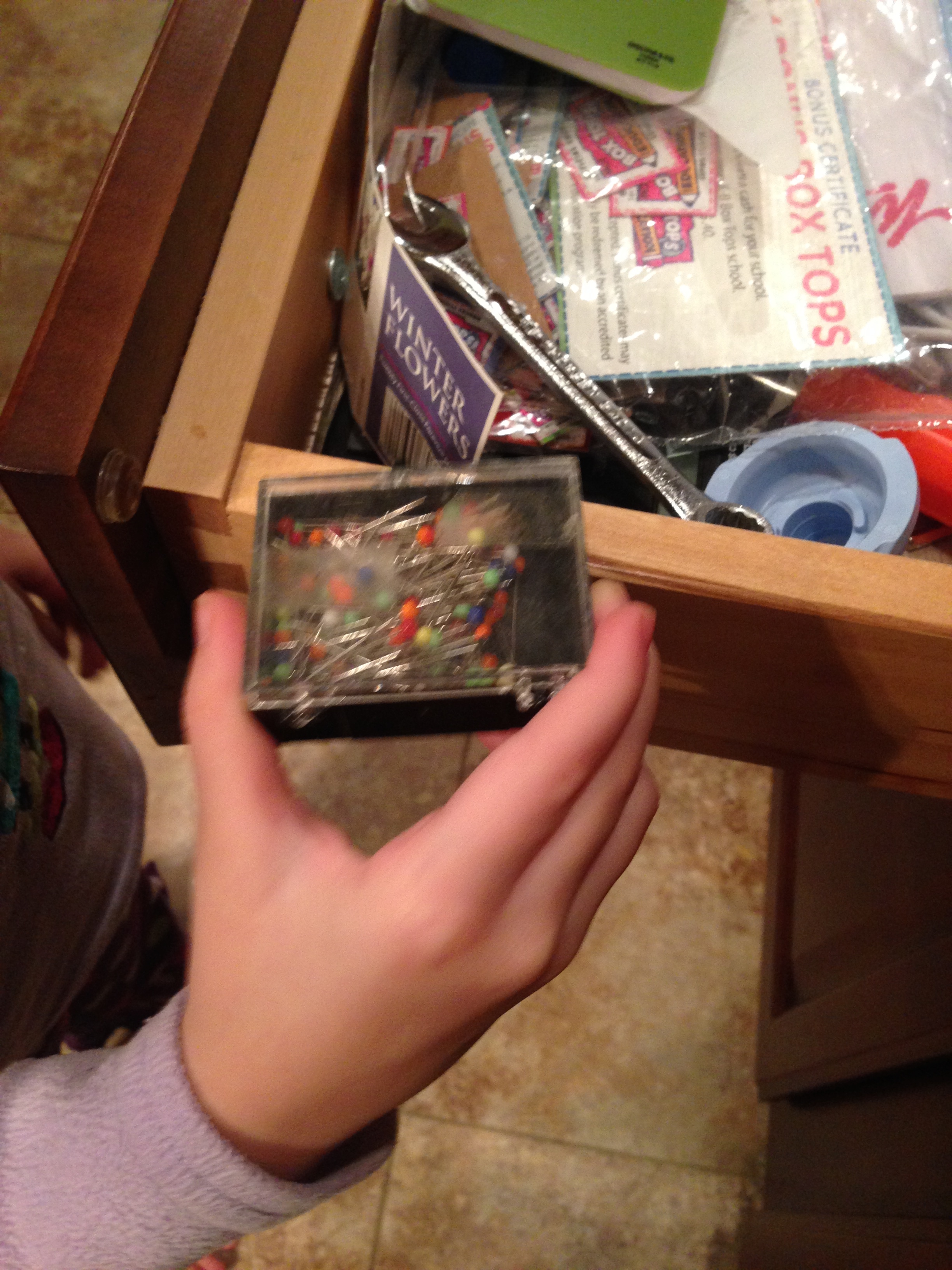
She even went to one of our junk drawers and drilled me on why we needed everything in the drawer. I was having fun coming up with answers while she kept asking why we needed things, even asking why we needed walls. That took me a second or two to come up with an answer, “So, that we have rooms.” She seemed content with my answers. But she hit me with a question that made me pause.
She was on a roll asking about the body. Why we needed elbows, knees, and why we had a tummy.
Then she asked, “Why do we live?”
I couldn’t think of a quick fun answer. I did think of a deep philosophical answer, but knew it wasn’t right for the moment. How could I provide an answer that she would appreciate?
Without a clear answer in my head I said, “We are alive because it is a gift, an opportunity for us to see what we can do with our lives.”
“To go to the zoo?” she asked.
“Yes,” I chuckled, “but to do other things, too.”
“Like make brownies,” she asked, “or to be a dad?”
I turned from the sink to look at her as she sat at the island playing with her My Little Ponies. He finger still in a splint. And a smile that made her eyes shine.
“Yes, like being a dad,” I said.
What is your answer to the question, “Why do we live?”
At the dinner table last night my second son said he had a blog post for me. I said, “OK, what is it?”
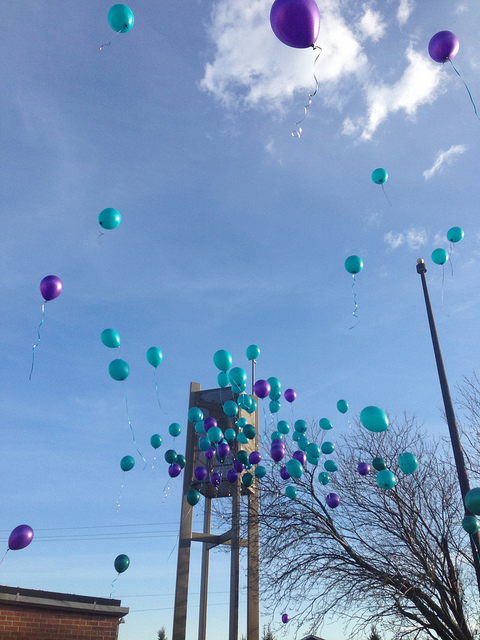
“We are balloons.”
He continued to explain that most of life we are held onto by someone. But we can be let go and float up into the sky. When we are up in the sky we feel lost and just wander around. He moves his hand to emphasize how random we move through the air.
He continues to explain that after awhile we start to fall back to earth because we lose air. At this moment my first son asks what happens then.
My second son explains that hopefully we find another person that will fill us back up and hold onto us.
I told him I would write the blog. If you have a moment would you share a comment for him on his idea? Thank you.
I did ask him if he had seen the film The Red Balloon. My son said no, so I thought I would share it with his blog so he could watch it.
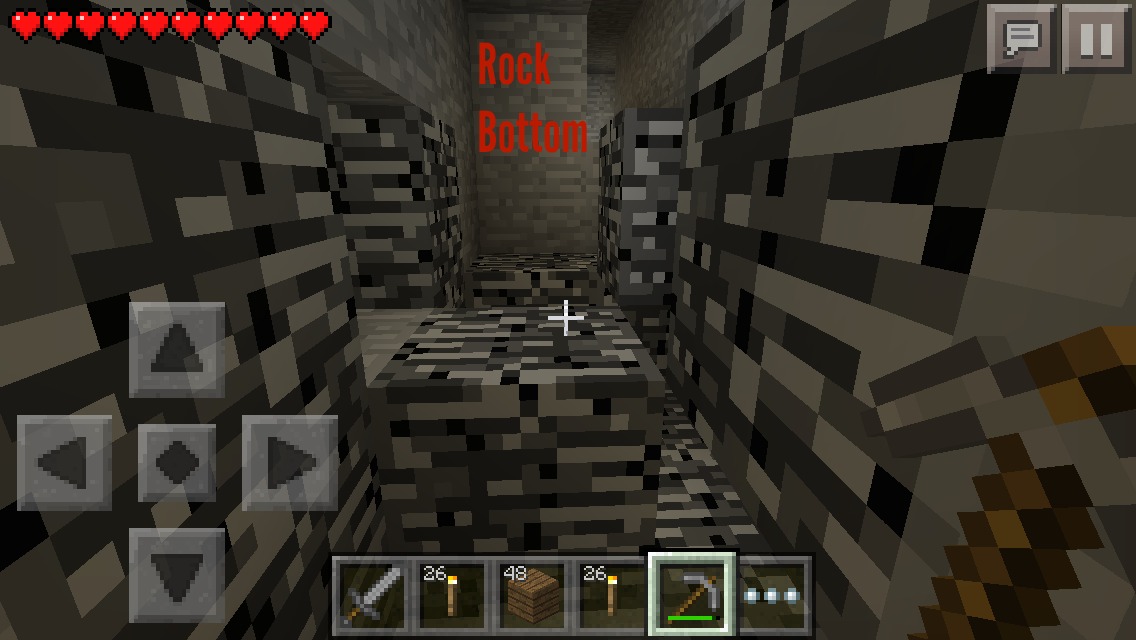
The picture above is from the game, Minecraft Pocket Edition. What you see is bedrock. The site Minecraft Info describes the block this way, “Bedrock can not be picked up or placed by the player. It marks the edges of the map and is an invincible block designed to prevent the player from falling out of the world.” It means I hit rock bottom.
We Need a Rock Bottom
I like the last part of Mincraft Info’s description, “designed to prevent the player from falling out of the world.” In real life rock bottom is a hard place to be. Getting there feels like you are spinning out of control, falling through life, and getting hit with bad luck along the way. But, unlike Mincraft, rock bottom is hard to recognize in our everyday life. Unless we have a drastic fall (which does happen), one day we are sitting in the car wondering how life got so bad. And we start to change, but that is for another blog post. This is about rock bottom.
We tolerate a lot in our lives, from going to a job we hate to participating in habits that destroy relationships and even our own life. Even with all the inspirational material around us, we can continue to be unhappy, stressed; or whatever adjective that comes to mind to describe living life below our potential. That’s what rock bottom does, it tells us it is time to climb our way back.
Life is not Minecraft
In the game it is easy to know when you can’t go any lower. The only options are to mine at that level, or start moving up. But life is actually simpler. At anytime we can start making progress back to the top. We do not have to hit rock bottom to make a change. To be honest, we know what rock bottom would look like anyway. So, why continue on that path?
Asking the question, Would I want to do what I’m doing today? and being honest about the answer gives us real life bedrock. Whether it is a job, a relationship, or a habit, the question and answer let’s us know where we are in this world. The sad reality, as stated before, is that we will live with a NO answer for a long time. But we do not have to.
Hitting rock bottom, or seeing that what we are doing will lead to rock bottom is a powerful moment for us. It is not easy, it is painful, but it can lead us to the life we always wanted to live.
We have All been There
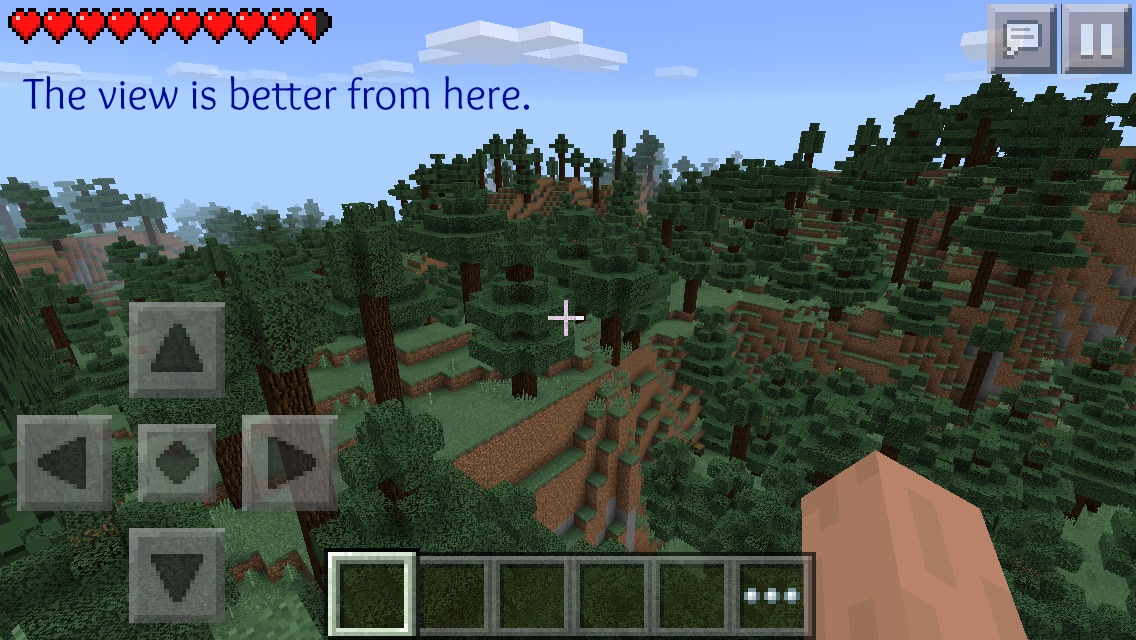
Through the pain, the confusion and frustration, let the rock bottom be the start of a great chapter in your life. Life may not be Minecraft but both of them are meant to be explored. See you at the top.
Over the last week the sophomores have been writing a narrative essay for my class. Much of the writing has been done in class. I read sections, give suggestions, and remind them to check for the use of “and” with Word’s search option. I try to help them generate ideas for introductions or conclusions without telling them what to write. During down time we talk. This is my first year with them, so I am still a new teacher and they are new students for me. In some ways it has been a good week to learn more about my students as people through the stories they share.
The whole week got me thinking about how hard it is in a typical high school setting to build relationships with students. To see them as more than a student. I see about 100 students in a normal day (some on a TV for distance learning classes). As a coach I get to see some of them in a different environment, but for many students I see them for 46 minutes a day. And in that 46 minutes I have standards to think about, lesson plans to follow, test to prepare for. To be honest, I know that I don’t know many of my students well. I understand it takes time, but maybe that is the problem… there isn’t any left because the bell just rang.
Yesterday I attended the funeral of my sister-in-law’s father. The main theme of the service was “stories.” There was a moment in the service for family and friends to share stories of him. One of the interesting aspects was the range of people who shared a story about him. From a granddaughter whose story was from the time she was eight (I think she is 10 now), to a childhood friend, who would be in their seventies, that had been a there during the during the last days, but more importantly been a friend for all those years.
Funerals always force us to consider our own mortality. To wonder who would show up, who would not. To consider what dreams we have accomplished and which ones we let slide. With such a strong theme of stories during the service I started to remember different moments in my life and all the different people that I shared those stories with. Some of them are still a part of my daily life; others have faded away. Only because life and time have a way of moving people away from us. I wondered who would come to my funeral, what story they might share because most of the stories really wouldn’t make much sense to anyone else besides us, the characters in the story. Only my best friend, Scott, would get the pop can theory story or the chocolate milk bombs. Only family will understand the power of a waffle iron. My family would only appreciate the Lemurs at the zoo story, or the attack of the goats. My wife is the only one who smiles when I mention the dollar menu at Wendy’s.
Our stories are important for a number of reasons. The first is because the stories make connections for us to people, places, and times. Holden, from Catcher in the Rye, might reveal this the best when he explains that he couldn’t leave Percy Prep until he could remember a story so he could say goodbye.
“What I was really hanging around for, I was trying to feel some kind of good-by. I mean I’ve left schools and places I didn’t even know I was leaving them. I hate that. I don’t care if it’s a sad good-by or a bad good-by, but when I leave a place I like to know I’m leaving it.”
Holden remembers an evening where he and some other boys stayed out throwing a football until it was so dark they couldn’t see the ball. Knowing that those boys might someday remember the same story gave Holden a sense that he mattered, that someone would remember him. That he was there. Something all of us strive for.
The second reason stories matter is because they developed depth to our lives. From laughing at the dinner table to packing a minivan with six kids to stay at a hotel in South Dakota, a life that has stories to tell is a life that is lived. That includes the stories of our challenges, of the moments when we failed. Stories like that are just as important for building connections with people and developing a life that is rich with experiences.
No matter who shows up to my funeral, I hope reading this post today spurred a story that we shared. But more importantly, I hope I spurred a desire to create even more stories… because at some moment in time, all of our stories will have an ending.
Last week one of my English classes studied “Harlem” by Langston Hughes. Many people know this poem as “A Dream Deferred.” One of the reasons I love literature and especially poetry is the joy to connect our life to the theme of the work.
The historical message of the poem is rooted in the dream of civil rights and still reflects the struggle we have as a society to fulfill that dream. But I think why the poem has such universal appeal is that Langston Hughes touched on such a deep pain we all face in our lives; dreams deferred.
Here is a moment of honesty. At the moment I am struggling with this concept. I have always had a grand dream of becoming a writer. Ever since fifth grade I have filled notebooks with stories and poems. I won a young authors award in high school. I financed the publishing of a book of my own poems in college, but life just kept pushing the dream to the back burner. Now at the age of 43 it seems that time is running out to achieve that dream. And it hurts. It feels like I will never be able to achieve that goal and it is fading away.
Langston Hughes uses decaying metaphors in the middle of the poem, “ Or fester like a sore—/ And then run?,” to create a visual for the consequence to our lives if we keep pushing our dreams to another day. The dream will have become rotten.
Then mix in the discussion I had with the students about reaching for their dreams, and I think I understand the last line as it pertains to an individual.
A dream deferred destroys you.
I am not suggesting that everyone can accomplish their goals, success is never guaranteed. But we can handle failure as long as we have the opportunity to try. Being a football coach has also been a dream of mine, and I was granted the opportunity. And I failed. It hurts. It hurts bad, but I can deal with it because I was given a chance.
But what is life like when there is no chance? When it seems like nobody cares about your dream or willing to help you with it? Langston uses the line, “Maybe it just sags / like a heavy load.” A great simile here to describe the weight of that dream sitting in your heart but no opportunity to achieve it. Then everyday it gets just a little heavier. A day turns into a month, that turns into years, that turns into a life. A life that never reached its true potential.
Let’s get back to my students, your students. School. Are they striving to accomplish their dreams? Or are we asking them to push their dreams aside for better test scores, for grades, or worse for some other time in their life? Do we even know their goals?
I’m not naive enough to say that fostering our students’ dreams will solve all the world’s problems. But, what would our classroom, our schools, our world look like if we were given the opportunity and support to try?
Langston Hughes describes it this way in his poem, “I Dream a World.”
“Christmas, Easter, Halloween… what are the other holidays?”
Almost every night you will hear a conversation like this between my two middle daughters and me. We read a story, say our prayers, and then I ask them what their favorites are.
I ask silly questions, they give me silly answers. They will ask me to ask certain favorite questions, especially if they did something cool at school or daycare. Sometimes the questions lead us on tangent discussions. But no matter what, we end the day with laughter.
It is not the questions, or the answers, that are important. It is the few uninterrupted minutes we share to end the day. No TV, or mobile device, or even other brothers and sisters. Just us.
I don’t know if they will remember our nightly ritual when they are 30 years old, but I know that it is important to them now. It is important to me. I am coming to the understanding of how important the small everyday moments are to the foundation of relationships. The small shared giggles, the sharing of stories, or sharing that all candy is your favorite.
At age 43 I am experiencing Erik Erikson’s Psychosocial Stage 7 – Generativity vs. Stagnation. In this stage adults wrestle with the idea of contributing to the world through family and careers.
But my struggle is not the idea of contributing to the world, but how well I am making a difference. It has fostered a question that I have considered for a while: is it better to be good at a lot of different things or great at one or two things?
I am not a great father.
I am not a great husband.
I am not a great teacher.
I am not a great writer.
I am not great at anything.
I am good at a lot of things. I have done some cool things in my lifetime: from hosting creative workshops to coaching a 400-meter runner at Hastings College that ran with the great Michael Johnson at the Drake Relays. But that is the center of the issue, I have become good at a lot of different things but have not mastered any of them.
My struggle is that being good has not allowed me to make an impact in this world. I see so many of my friends and colleagues doing great things. Everyday they are making an impact that builds positive results in their world, and the difference I see is their focus is on one or two things. They are known as the expert, or the go-to person for their field. They are #rockstars. I would love to make such a difference in this world, but I am not a go-to person. I don’t have a focus on one thing that people know me for. I am good at a lot of things, but great at nothing.
Now, let’s back away from my struggle to connect to the idea of school and education.
The traditional school system is designed for our students to be good at a lot of different subjects. Understand, I strongly agree that we need a foundation in our education. But when a student graduates from high school are they great at something? Have they had the chance to start down the path of greatness?
Here is a stat for you: Almost 80 percent of students change their major at least once, according to the National Center for Education Statistics. In reality, about half of the students will change their major two or three times. So, they are not on the path of greatness until, maybe, their sophomore year in college. Throw in the idea of 10,000 hours to achieve mastery, and it is clear that school is not setting our students on a path of greatness.
So how can we design an environment to foster an opportunity for students to not only find their passion, but the chance to become great at it? First, get rid of the bells. The hardest part of being back in the classroom is the bells. Especially with 46 minute classes. There is no way for students or teachers to become engulfed in anything. To lose themselves in learning. To develop the intrinsic drive to become great.
Another area is standards. I know standards are a part of the educational landscape and will continue to be for a long time. Again, there needs to be guidelines that help schools build meaningful curriculum. But standards should be guidelines, not stone written rules that govern every single lesson we plan.
I know of teachers that will only do things that connect back to a standard. I remember going through the S.T.A.R.S. training and the moment when the person leading the training explained that dinosaur lessons in elementary school would have to be eliminated from the curriculum because dinosaurs were not a part of the standards. Kids love dinosaurs. Even my four year-old daughter will choose a book on dinosaurs for bedtime. How are we to help kids find what they love when we won’t even let them learn about things they like?
Why is greatness important? Our society is at a point that being good at something will not guarantee anything. To be honest, even being great at something is not a guarantee for success, but it improves the chances. I’m not talking about money, but about living a life that is filled with a sense of accomplishment. A life, as Erik Erikson theorized, a life where you feel that you have made a contribution to your family and the world.
To start out I want to give you a few dots that I will connect in a minute.
Dot 1: This quote, “All parents damage their children. It cannot be helped. Youth, like pristine glass, absorbs the prints of its handlers. Some parents smudge, others crack, a few shatter childhoods completely into jagged little pieces, beyond repair.”
― Mitch Albom, The Five People You Meet in Heaven
Dot 2: The metaphor “Life is a highway.”
Dot 3: My students’ view of life.
Dot 4: The windows in my car.
First, let’s expand Dot 2. If life is a highway than we must drive to get through life. Each one of us has our own “car.” We view life through our car windows. Which brings us to Dot 4, the windows in my car.
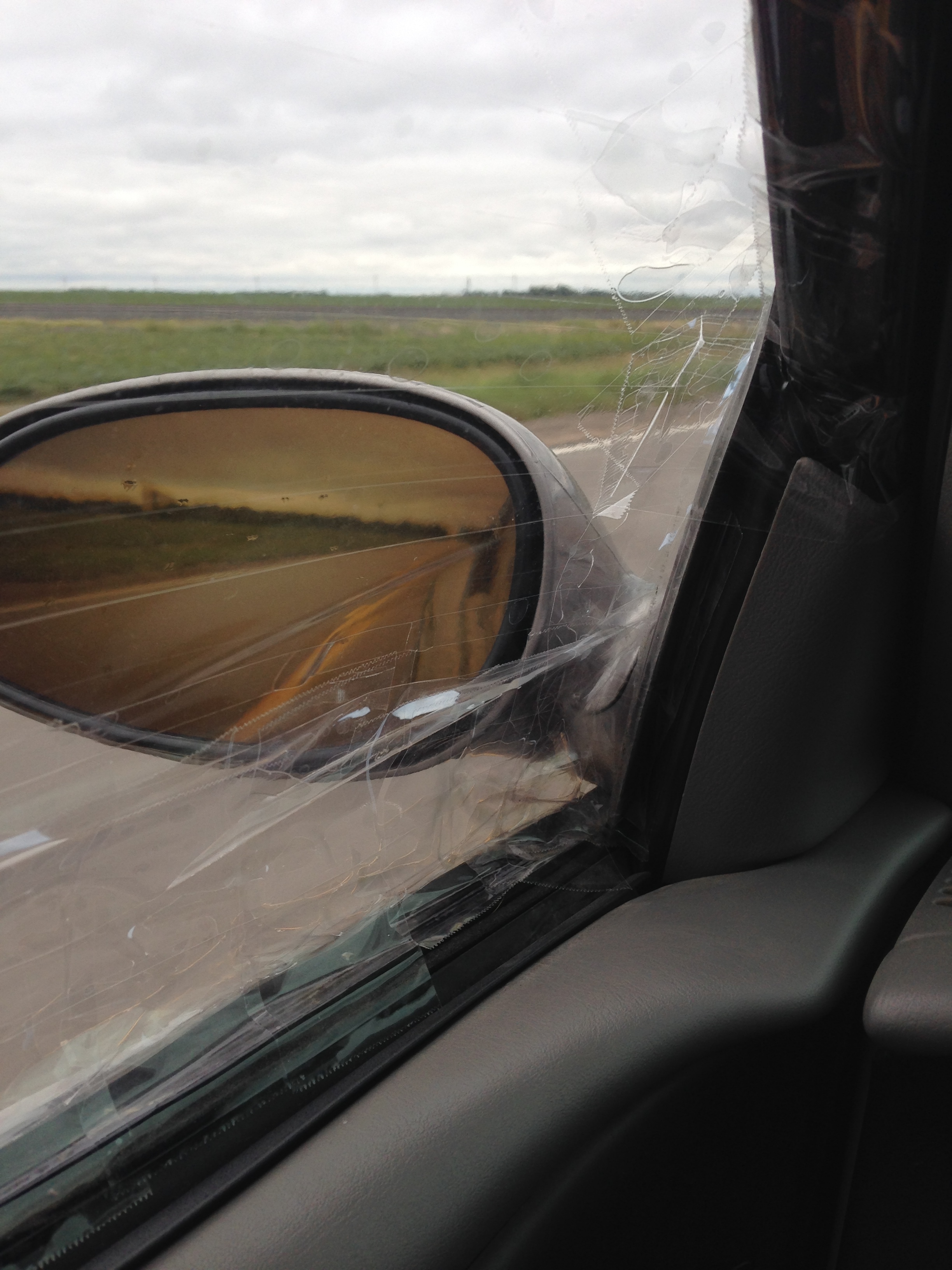
My driver side window fell into the door so I used packing tape to fill in for the window until I can get it fixed. The front window has a huge rock chip that sits just at the bottom of my line of vision. I can see out of both windows well enough to drive, but the view is skewed.
Dot 3. Everyday I hear, in some form, how much students dislike school, or that they don’t like to write, or they don’t like to read. I teach English. But also, everyday I learn more about the students’ fears and hurts of life. Reread Dot 1. But it is not just parents that create issues for students (or anyone). Just living life creates its fair share of damage to their windows, or view of life.
Let’s connect the dots. Everyone is on this highway, each driving their own car. A car with different degrees of damage to the windows. These damaged windows affect our view of life. This damage creates a challenge for us to overcome as we drive, so we cannot see that every driver is dealing with his or her own damaged windows as we go through each day.
At times the highway seems so dangerous, but it is not because we are bad drivers. If you really think about it, with all the different ways the windows become damaged, and how we make it through everyday, we are pretty skilled drivers. The way to make the highway safer is to focus on fixing the windows people view life through.






 It is all Connected