On the fourth of July the three older kids had spent the previous night with their aunt and uncle. My wife and I had the two little ones and we met at a small community pool near the in-laws. It was a good afternoon. The pool allowed us to hold the little girls as we went down the curvy slide. Yep, I think we had to go down that slide at least a hundred times.
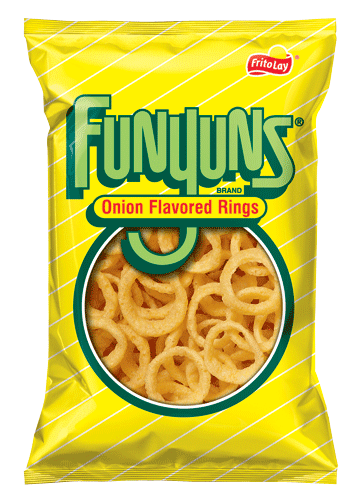
On the way out of town we stopped to get something to drink and a snack as we headed to the in-laws for the rest of the fourth of July. My wife and I still had the two little ones, so I ran in to get the stuff. My wife had asked for a Pepsi and something salty. I wandered around the trail mix and peanuts, and then saw on the bottom shelf of the chip sections, Funyuns. One bag left.
As I carried the stuff to her window she broke out in a huge smile. As we drove to the in-laws we all enjoyed the bag of Funyuns. The little girls would ask for “nother one Mom” as they chomped on the one in their hand. The airy onion-like rings were perfect.
Both my wife and I love Funyuns, but it is not a snack we buy often. It is such a different snack that we usually opt for something more traditional when we are shopping. Why? As I stood in the aisle looking at the bag I debated if I should grab them. Even though I knew my wife and I enjoy them, it was still a risk. But the risk was stepping out of the safety of a routine.
Funyuns themselves are just different. The taste is not quite onion. The texture is fun, and the shape is supposed to be round, but you never get too many perfect round ones. They are different. And that is good.
Life just gets into routines. We feel safe in that routine, and sometimes we sacrifice what we like for safety. Be it from ordering the same dish at a restaurant, to squelching that impulse to be spontaneous because we do not know the outcome. Ironically, we know we would enjoy a different dish. We feel that spontaneous desire for a reason. So, I challenge you today to go ahead and buy that bag of Funyuns. Because I bet you will be like my girls and you will want “nother one.”
Reading the book Too Big To Know, by David Weinberger, was one of those moments that helped me see something I already knew in a slightly different light and that sparked a whole new train of thought. I love these moments.
The book is a look at how the Internet is changing the view of knowledge. I highly recommend the book, but I want to discuss the most obvious point from the book. Abundance.
Courtesy of Cornell University Library from Flickr
As David Weinberger points out, we have had an abundance of information for a long time. Have you read every book in your local library? Have you read every book you have bought or downloaded? Neither have I. What the Internet does is make that abundance faster and in different forms: articles, videos, apps, music, and opinions.
School is out for the summer, so I’m going to approach this idea from a dad perspective. Through this example I hope to express how abundance can be a great thing for learning.
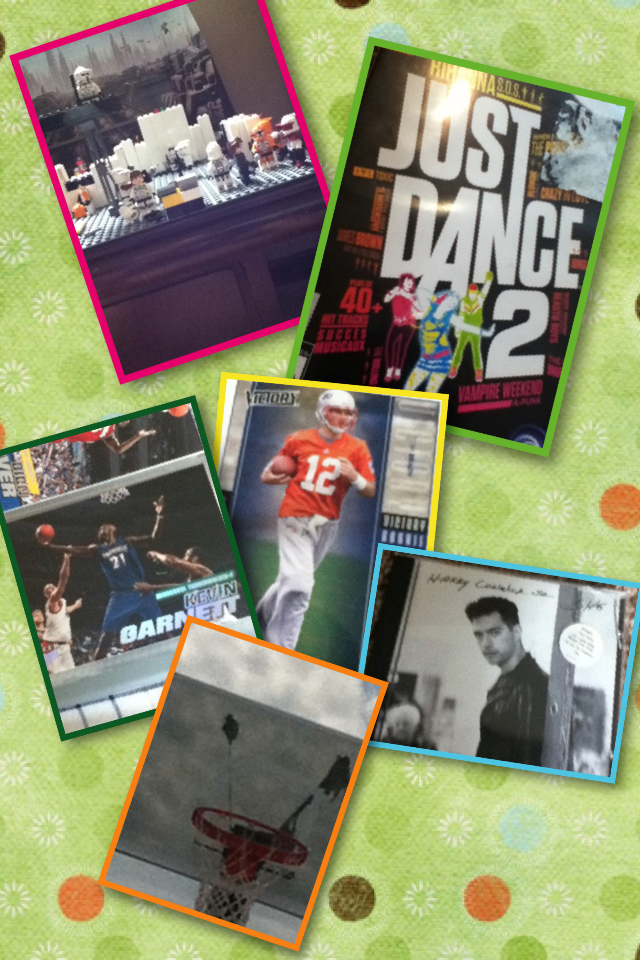
Question, what does “Wake Me Up Before You Go-Go,” the 2012 Eastern Conference Finals, Yoda, and a Tom Brady rookie card have in common? Answer: My sons and how they come to find interest in things.
My two sons are 11 and 9 right now. And because of the abundance of the Internet and technology, I have been having a blast sharing my interest with them. One example is music. Right now my oldest son is into Harry Connick Jr. and 80’s music, while my other son is listening to the songs “Good Life” (One Republic) and “Believe” (Cher). They use Grooveshark to create playlists to dance to, or to have as background music as they play animal tag with their sisters.
My oldest son’s interest in 80’s music comes from the video game series, Just Dance. His interest in Harry Connick Jr. comes from the movie, Dolphin Tale, which Harry Connick Jr. has a role in. I have some of his CDs, but my son has been checking out other CDs from the library.
When my second son bought his iPod, I put some music on it he might like. The music on his iPod has grown from his own interest and suggestions from me. One of our favorite songs is “Closer To the Edge” by 30 Seconds to Mars.
We cheered on the Celtics (I am a Kevin Garnett fan) in the Eastern Conference Finals together because of trading cards and the NBA 2K11 video game. My second son’s favorite basketball player is Shawn Kemp, who he has only seen play on YouTube videos and the video game. He does have a few of Shawn Kemp’s trading cards.
We watched the Super Bowl because they have a Tom Brady rookie card. I’m a Minnesota Vikings Fan, last season was a tough one.
They don’t like everything I share with them, but what is incredible is the ability to share aspects of my life with them. And to share the original content, not just a story. My music collection is not unpacked yet, so I use Grooveshark to share a song they might like. Then if my second son wants the song we can buy it from iTunes. When my oldest son got the part of Winthrop in TheMusic Man last September he used YouTube to study the role.
The abundance we have can be a powerful aspect to our lives. Yes, there are some negatives, but that is for another blog post. My sons’ and I are building strong connections because we can share and experience life in a completely different way than before. History is important and powerful. Shawn Kemp is my son’s favorite player. He has never seen him “play.” But he knows a lot about him, plus he understands the history of the Oklahoma City Thunder (who he is cheering for in the finals because they use to be the Super Sonics) because of his interest.
When embraced, this abundance we have can allow us to naturally learn anything that interest us. It can build connections; between people, between today and yesterday, and even between who we were and who we can be, because it allows us to explore and investigate life in ways we couldn’t before. It gives me an opportunity to be a better dad, to be able to enrich my children’s life with more than just stories. I can share my history sometimes in its true form today.
I remember when “Wake Me Up Before You Go-Go” was a hit in 1984 and have shared stories from that time in my life with my boys. Today, the song is just as important because it makes us excited when it is one of the songs for the dance battle on Just Dance 2 (yes, I have won on that song a couple of times).
A Pic Collage of Interest
P.S. My second son made the collage this morning at home while I am at work. Connectedness, but that benefit of technology is another blog post.
Saturday morning I was working on cleaning the kitchen, getting recycling organized, cleaning counters, stuff like that. The house was in full child mode, the older three were downstairs doing something that made a thud every few minutes. The two youngest girls were in the recliners, movie on but their attention on the books in their laps. My wife was getting ready for the day.
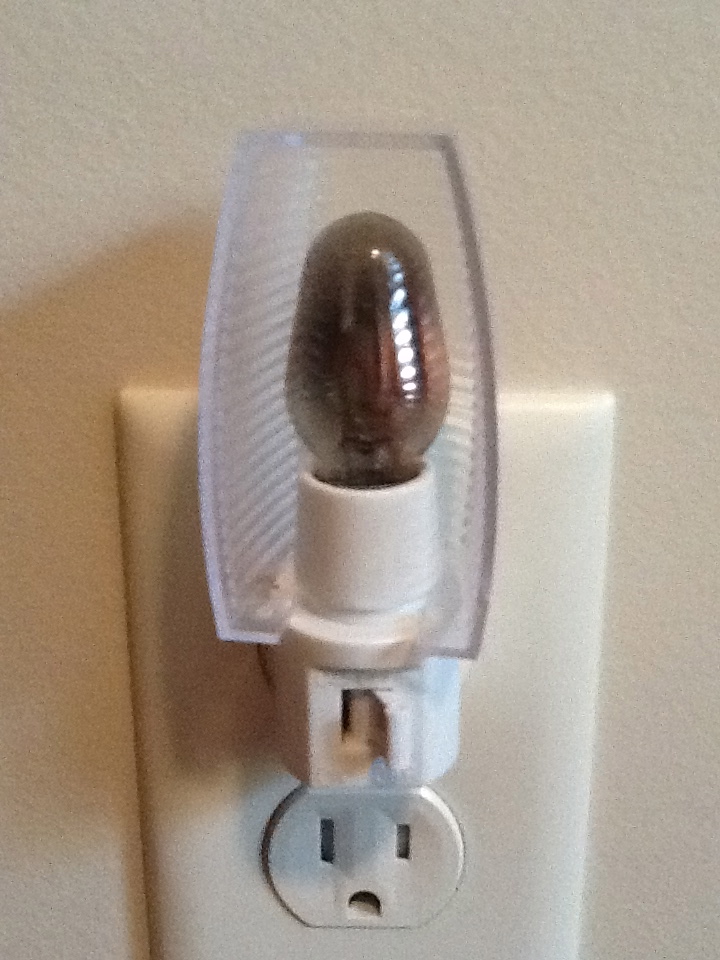
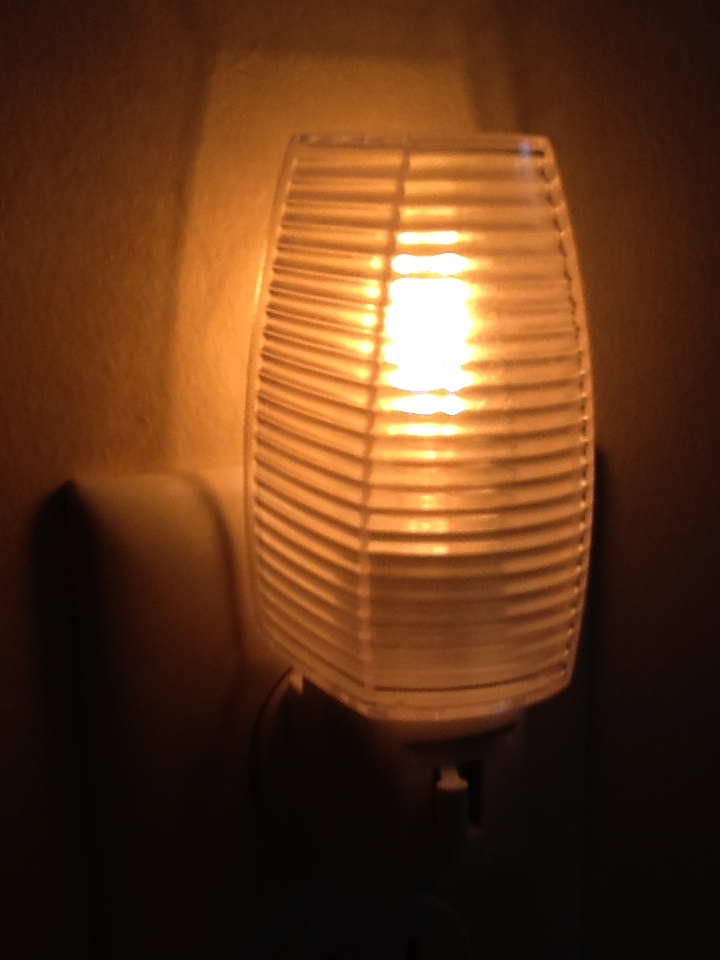
I had started on the clean dishes in the dishwasher when my second son said, “Dad, I hit my nightlight and now all the lights downstairs don’t work.”
What?, I thought. And I felt the knee-jerk reaction of parental frustration start forming in my head with the words already on my lips. I don’t know why, but sometimes life gives us a moment to learn from, and I gave myself a few moments to think by saying, “OK, what happened?” in a calmer tone. Just under the frustration a thought had pushed through, if I wanted my son to continue to talk to me when things happened, when he might have made a mistake, then I had better pay attention to how I handled this situation.
By bumping his nightlight he threw the breaker for that part of the basement. Not a big issue, I switched the breaker back on and changed the light bulb in his nightlight. Problem solved. But I haven’t always handled simple situations with calm; too many times that knee-jerk frustration sets the tone for that moment. I realize I need to change that habit. If my son has a problem and he gets negative responses from me every time, even before I have figured out what is going on, then he will simply stop coming to me for help. I don’t want that to happen.
We teach people who we are by our habit of response. And they will act accordingly. As I thought about how we influence students I thought of one of the most patient and strong colleagues I have worked with, Mrs. Moss at Centura. Every morning she was helping students with math problems. Every morning! They knew she would be there for them, they could ask their questions and know she would help them. Mrs. Moss’ habit was to smile and say, “Let’s look at that problem.”
I hope to be as good of a teacher and parent as Mrs. Moss, to create a habit of response that lights the way to a positive reaction to the situation instead of a knee-jerk negative comment.
There has been a kind of running joke between my students and me about how I deconstruct Disney movies with my kids to reveal the “deeper” meaning of the film for them. Actually, I do that, but that’s not the purpose of this blog.
I love to hear, “My brain hurts.” I think I do a good job at creating lessons that reach a deeper level for the students. Many times my students do better on their Literacy Skills AR test than the Reading Practice test. But, at some point a student will ask, “Does everything have to be so deep?”
Yes, yes it does.
OK, maybe not so deep but I think we have to have a serious WHY to what we do. Teachers have to answer that question all the time, but maybe it is something to really consider. And not just for a lesson, but for our lives.
In school, sometimes we have to practice a skill, like math or welding. Sometimes we have to learn new vocabulary so that we can look at a subject on a deeper level. And sometimes a lesson is just fun or relaxed. Many times in school the WHY is based on test scores or grades. A look at those parameters and learning is for another blog. But schools have to have some measurement and we will leave it at that for now.
Let me give you a stat: “Thirty percent of college and university students drop out after their first year. Half never graduate, and college completion rates in the United States have been stalled for more than three decades,” from US News and World Report.
Is the WHY of school to prepare students for college? Or should it be to help them live up to their greatest expression of their talent and dreams? WHY are we doing what we are doing? I know that I am in a unique situation that lets me investigate education from a different aspect while also being in the “classroom” dealing with the real world of teaching. Being at this intersection is frustrating and motivating. I would love to change education, but in reality I am not much of an influence. But like you, I have a classroom, students, and a life to live.
This year I had one of those great teacher moments when a former student tagged me in a photograph on Facebook. The photo was of a slide that had graffiti scratched into it, the worst kind. This former student is a father now and was spending time with his son at the park when he came across the graffiti. Part of his post, “Made me think of the book The Catcher in the Rye. Kids and their innocence.”
What we do in the classroom matters. What we do in life matters. It might make your brain hurt, but I ask you to answer your own WHY questions this summer.
As stated in Barry Schwartz’s TED Talk, too many options can be paralyzing. We all feel empowered by choice. It gives us a sense of control of our lives, of our own happiness. But I agree with Barry Schwartz’s there is a negative side to choice. Whether it is too many choices, or an unexpected choice, we don’t feel empowered. We feel frozen and unsure.
Personally, I went through this last week. I was presented with an unexpected opportunity to return to the classroom. Understand; this was a choice that was totally unexpected. It challenged me to think about my future: where did I want to be in five years? Where did I want to be next year? Instead of feeling free and honored to be considered for the position, it froze me. I decided to stay with ESU 10 at the moment because I needed to finish what I had started. Where will I be in five years? I can’t say for sure, but that is for another blog.
But I’m starting to see this paralysis in education. Many schools are considering going to a 1:1 environment with iPads. I think that is awesome, but there is a hurdle that needs to be addressed: app choice.
7415 free apps in the area of productivity. How productive would I be sifting through all those choices? I know what you are thinking; use the search option. OK. I’ll use the keyword “Grammar” (Hey, I’m an English teacher).
Results: 720 apps, both free and paid.
As the landscape changes in the classroom with mobile technology, it is good to be aware of different hurdles that a school, a teacher, or student may face. In this case the option of choice regarding apps. A great benefit of mobile devices is the ability to personalize content and the learning experience a student has through the apps and tools provided for them. But which app to choose? There is not a “right or wrong” answer here, but Barry Schwartz’s does present a philosophy to consider.
We are in a transitional period, a reconstructing of our “fish bowls” you might say. It is not easy, but it is exciting to be in the mix of this change. What will education look like in 5 years? The choice is ours…
I have a question. Did you drive the same route to work today?
Because I was working from home today, I got to drop my two little girls off at daycare. There were hugs and kiss and some crying, but the girls were happy to have me drop them off (and pick them up later today). Then, I drove my wife and three older kids to school, but I took a different route than normal. Just to mix it up. At school I played Uno with my three oldest children before school started, and then I headed to get coffee before I headed home.
The morning was filled with more energy and laughter just because of the difference in the routine. Sometime we just need a little difference in our lives to get us out of that rut feeling. Driving a different route, getting a different coffee, or doing one thing different can add a shot of life into a normal day. Will you “Take the Long Way Home”?
In the month of April I had the privilege of presenting at two outstanding conferences: Mobile 2012 and NETA. My goal was to inspire ideas on how to be a mobile teacher: how to use the iPad to bring the world into the teacher’s classroom.
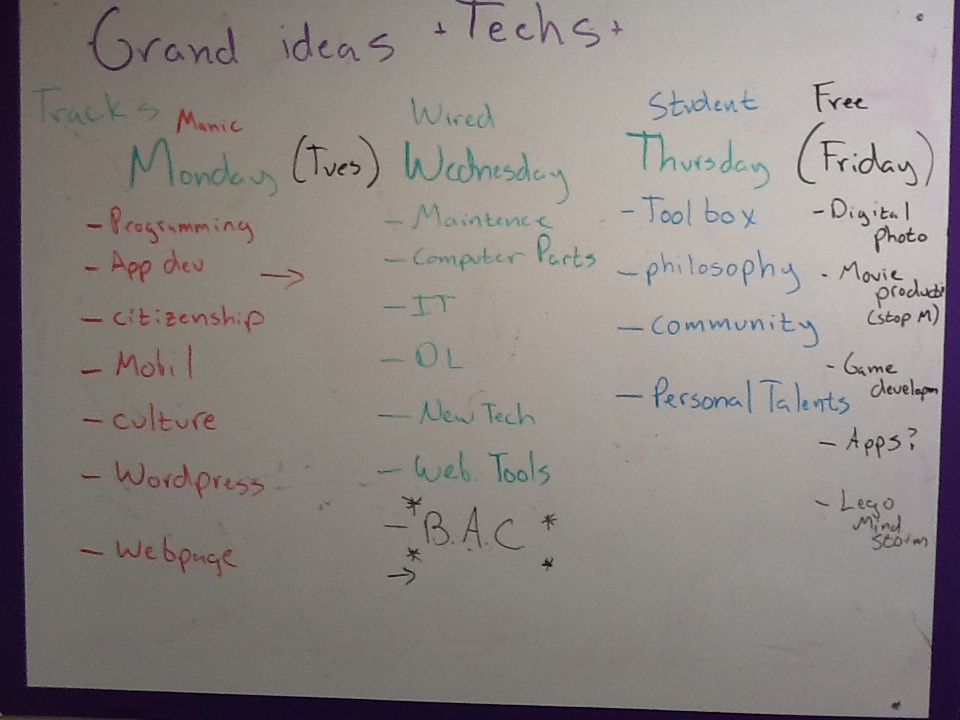
This week at work I am brainstorming ideas on how to make my CCC and TECHS class better. I’m calling them my “Grand Ideas.” I filled my whiteboard with them for the TECHS class.
Grand ideas are exciting. When we attend any conference, we come away with these ideas. We feel energized. We feel inspired. The next year is a blank canvas for us. We are ready to take those ideas and create new lessons, but…
Grand Ideas are scary. They push us out of our comfort zone. We know the new lesson might just fail. That is OK. Run with your Grand Idea. Fuel that inspiration by striving for it. It will take work, a step back sometimes, but for teachers our lessons are our creative process. The lessons are works of art for us. But you have to pick up the brush.
One secret to success is to tell someone your goals, share your Grand Ideas with others in the comment section. Contact me if I can help you in any way. Just imagine what your classroom will be like next year…
What a year… As the academic year winds down I have time to reflect on how much I failed this year. But I have learned some interesting things about education and myself through these failures.
The first lesson: Teaching is really about the relationships we build. By teaching from an office over a codec system 100 percent of the time has reinforced how important personal interaction is. For the students and the teachers. And it is not just the connections we develop during the class; it is the daily vibe of school. The interactions between class, lunchroom banter, and the questions before and after school.
I was unprepared for the drastic change in the environment of my classroom. Trying to remember names, understanding strengths and weakness, and interacting with students to understand their personality. I failed. I have a few ideas for next year that I will try to use to create a better personal connection with the students. Because, at the heart of learning, is the relationship between student, teacher, and the subject matter.
The second lesson: Technology is not a separate component to learning. It is not a bonus feature to bring into the classroom and use because it is cool. I failed in the use of technology this year. Part of my teaching responsibilities is the TECHS course that ESU 10 has developed over the last seven years. Since the class is centered on teaching all aspects of technology I thought I had to use technology everyday. Which isn’t my personality (lesson three). So, I saturated the class with technology instead of using the best tool for the lesson.
The third lesson: Teaching is an art. I know that there are strategies that support an effective classroom, but I think those strategies work because they support a teacher’s personality. For the TECHS class, I used everything that was in place from last year (I did add some lessons but I used the timeline, test, and other assignments that were already set up unchanged). And I failed. It was like trying to dance with another person’s shoes on. Hard to find your groove.
Ironically, Mr. Stritt told me how each year the class changed, lessons were moved, new ideas added. But I tried not to change it, to follow the great lessons that ESU 10 had built. But it wasn’t mine. It didn’t fit my personality. Which connects back to lesson one; learning is a relationship between students, teachers, and the subject matter.
The fourth lesson: Failure can be a good thing. I have learned a lot this past year. Would I do it again? Maybe not, there were some hard times for me. But to have the opportunity to come to a deeper understanding of education was worth it. I am excited to see what I do with my failures next year. I hope I can write a success blog next year.
My two little girls were excited this morning to go to daycare. Fridays are show-and-share days and they had something cool to show today. Snap bracelets. I gave the girls the snap bracelets last night. The girls had no idea how they worked until we showed them.
I brought out the bracelets straighten out, then held my girls’ hands and then snapped the bracelet on to their wrist. They responded with a wide-eyed expression that then turned into laughter. My youngest hollered, “Again!”
For the next five minutes my wife and I snapped the bracelets on our daughters’ wrist, on our wrist, and of course even the older ones had to get into the fun. The girls soon wanted to snap the bracelets themselves. My youngest had a tougher time getting enough force behind her snap to get the bracelet to curl around her arm, but she did get it a few times.
My second daughter, though, took off with it. She had it on her ankle, “Look daddy, look at the lizard on my foot!” She had it on her upper arm; she was snapping it on her brothers’ wrist. And she had to take it to bed with her.
This morning they had their snap bracelets on and excited to share with their friends at daycare.
As life does, it got me thinking about education. Without getting too bogged down with deep issues, the snap bracelets are a great example of learning. When my girls were presented with the bracelets they recognized the animals, but did not understand the apparatus the animals were sitting on. We “told” them what it was. They still didn’t totally understand, but they knew what jewelry was and this didn’t look like a bracelet. Then my wife and I demonstrated how it worked. It was the coolest thing they had seen. My girls understood, but weren’t ready to do it themselves, so we demonstrated for a while then handed the bracelets off to them to play with.
Now comes the powerful aspect. My youngest daughter could make it snap once and awhile, but she still needed assistance. Plus, she only wanted it on her wrist. That’s were she is as a two-year-old. But my second daughter, almost a year and a half older, took off with the snap bracelet. Understanding the concept, she tested it out on her ankle, on her upper arm, on her siblings.
Isn’t that what we want in learning? As teachers we are there to show our students the subject matter (a poem, cell division, drawing perspective). We can “tell” them stuff, but once we show them how powerful the subject is, to practice the concept with them until we let them go to expand their own learning. To test the ideas out, to experiment with the concept, to create a new idea… to learn.
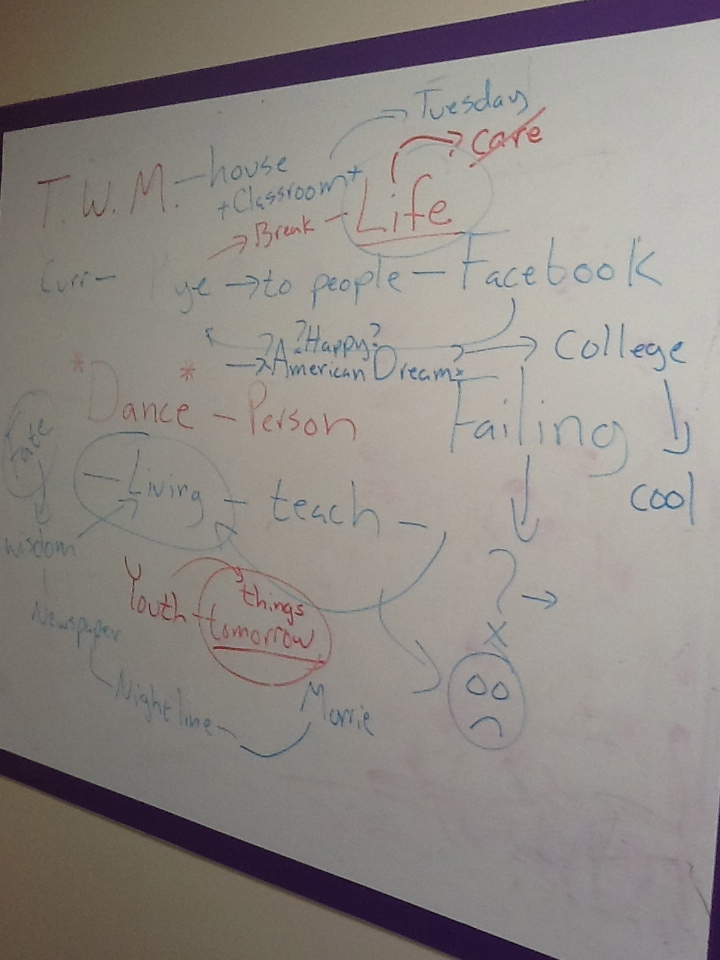
This is the semester that I teach American Literature for CCC Grand Island via distance learning. For the first time we are reading Tuesdays With Morrie. Instead of creating my notes on a notepad or with 3 X 5 cards, I decided to use the highlight / note option in iBook. Plus, I decided to project the book on the screen as I lectured and presented notes on the whiteboard. Day one went well.
My Lecture Notes
As you can see above, my “notes” are crazy and always have been, even in my traditional classroom. The iPad 2 added some unique aspects to my delivery. A cool aspect was integrating YouTube videos into my lecture. I love connecting pop culture references to my lessons. As I formulated my notes, a couple of references came to mind and I cued them up on the YouTube app. Then, placed a cue in the notes when to show them. With a swipe of my fingers we went from book to video (slight buffering).
Another aspect I liked was that, in most cases, my notes did not hide the highlighted text, so the students could easily see both. This didn’t happen 100 percent of the time, but over all both were visible.
The rough spot was me. First, I am use to having my notes on paper or 3 X 5 card, and would have the same craziness on my own notes as you see on the whiteboard. That is the way I think (and usually talk, but I get to the point). Also, my timing was not perfect in switching from me to the book. Not a big issue, but I found myself writing on the board when the book was still on the screen.
Talking with a few of the students after class, they said they liked the approach. They said that seeing the highlighted sections helped. They also enjoyed the videos; it allowed them time to think and presented a different insight to an idea in the book.
I hope to collect some quotes from the students (an assignment they have) and use those in the lecture as discussion points. Overall, I like the ease of using the book with the highlights and notes imbedded in the text. Plus, being able to use one of my favorite tools, pop culture allusions, adds some fun to my lecture.
Share your story of how you are using the note and highlight option in iBook in the comment area.








 It is all Connected