Bad Day

Did you ever feel like nobody listened to you? Or that what you were doing didn’t really matter? Or that you just felt tired of fighting the system? Yeah, I’m having that kind of bad day.

Now there are all kinds of factors in play; I am overly tired (little one is still getting up at least once during the night), it is the end of the semester and didn’t go as planned, and little things just don’t seem to be going my way. We all have had these bad days. But it’s important to know one thing.

No matter what job you have or what you’re trying to accomplish, you always have hurdles. Days where it just doesn’t go right. Sometimes these bad days make you feel like giving up. But it is in the habit of dealing with these days that matters.

There is a famous quote by Wayne Gretzky that says you miss every shot you don’t take. There’s a ton of other inspirational quotes that I could use here. But it’s not about the quotes (plus I embedded a good speech remix below done by Vulture from Coach Taylor of the TV show Friday Night Lights ).

It’s about recognizing the importance of what you’re doing. Of moving toward whatever goal that you have set. Bad days are tough. But see them as those intense training days of life.  We learn more, improve more, become stronger on those days that we are tested.  Bad days are those days; use it to strengthen your foundation.

Goals get accomplished because you work through the bad days. And you keep in mind what you are doing. Because it matters. It matters to you. And it matters to the people around you. Your students, your family, and your coworkers. So if you’re having a bad day. I hope you turn it around by remembering that what you’re doing right now matters.

1 Comment

Filed under Family, Life

Aurasma

Overview:

Aurasma Lite allows you to create and view augmented reality tags, or Auras as they are called, in the world around you. The app allows you to create your own tag with premade Auras provided in the app (Aurasma animation, images or 3D models), or leave your own photo or movie file from your photo stream.

There are two options for making an Aura with the app, regular and local (published in a channel). A regular Aura is usually connected to an image that you place the Aura on.  You can then share that Aura through social media or email.  When someone clicks on the Aura link they can see your tag if they have the same image. A quick example would be leaving an Aura on a newspaper photo.

A local Aura is placed in a physical location.  This is great for creating tags for schools, or museums.  The difference is that the user makes a channel to share the Auras left at that location.

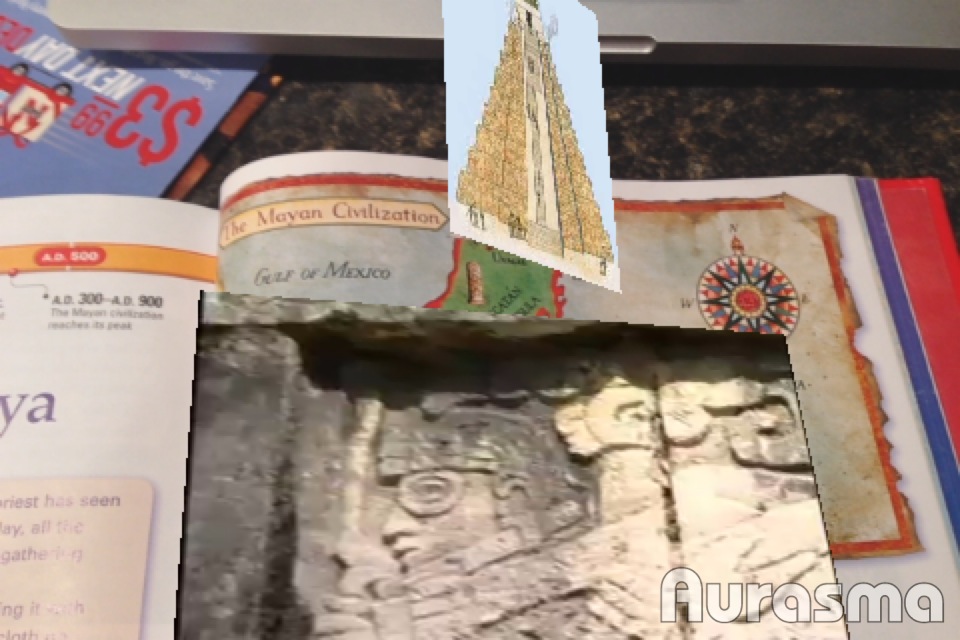
Aurasma also has a studio to create layered Auras.  The picture in the “Why I like it” section will give you an example of how the studio works.

Why I like it:

Steps to View:

1.Download the Aurasma Lite app.

2. Create an account.

3. Search for  “Jamey Boelhower ” with the search option and subscribe to my channel.

4. Point mobile device at the picture below to activate the Auras. Double tap the video to go full screen, tap the A to go to Aurasma’s site, and tap the Twitter icon to see my profile. Video was made with ScreenChomp.

Try to have iPhone in the full screen, might have to move your device to start the Auras.

Use in the classroom:

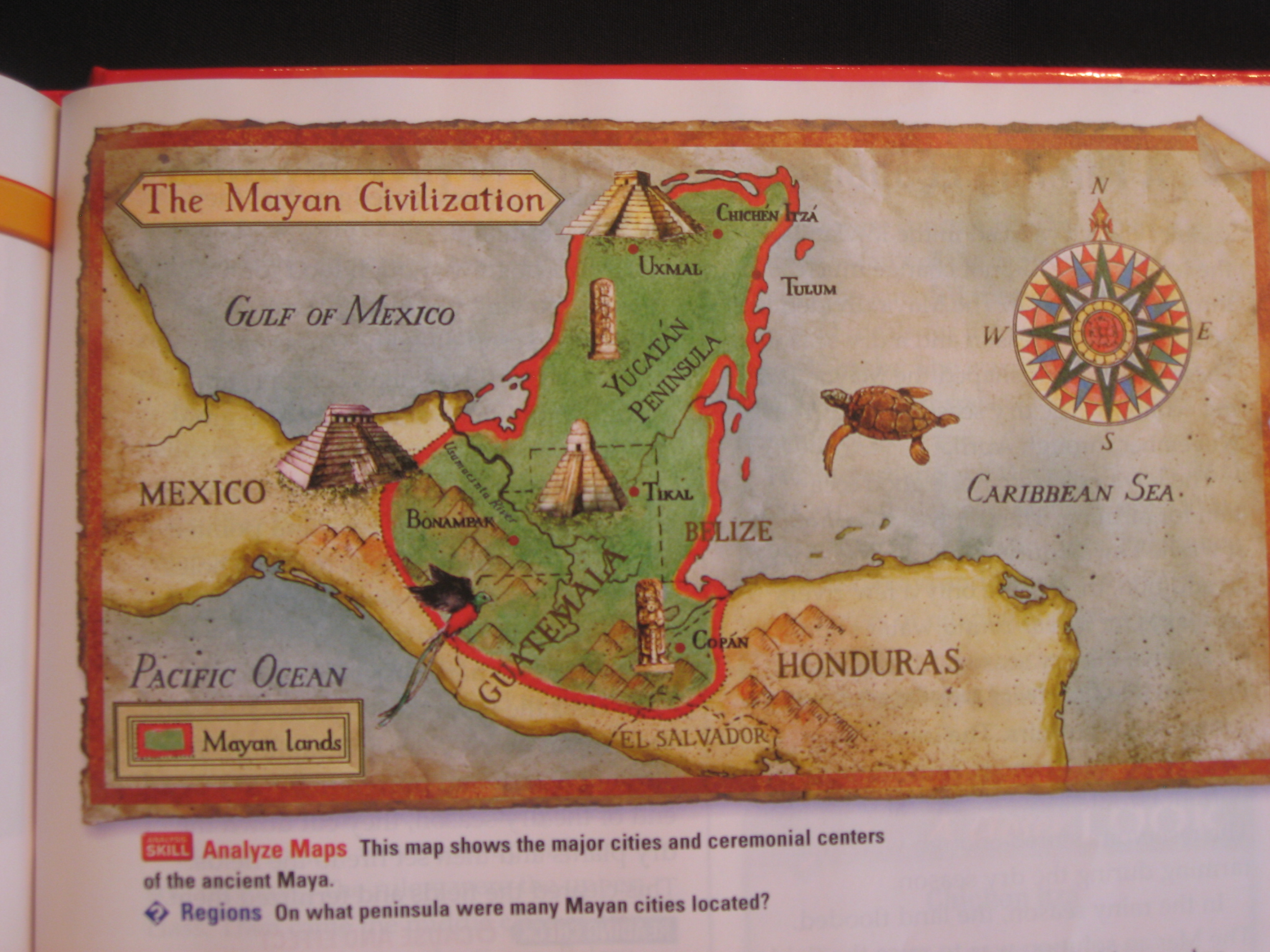
I think the power of Aurasma for educators is in the studio creation of Auras.  Below is an example of content I have tagged in a social studies book.

Map of Mayan Civilization

Auras include video and picture of temple.

Like the location Auras, the studio allows you to have a channel that you can update at anytime.  You can leave instructional videos, websites, and other material tagged in traditional books.  Many students use the calculator on their phone to do math problems, imagine, though, that they can review a lesson because it is tagged to an image in their textbook.

Using the app to create Auras can be a great way to make posters or bulletin boards interactive in the classroom.  Students can make review videos for books and leave Auras on book covers.  There are some many ways to use Aurasma in the classroom.

Share your ideas with me via Twitter (jdog90).

Leave a comment

Filed under Education, Technology

Coursebook

Overview:

Coursebook is a personal video textbook.  Coursebook features videos from Ted, Khan Academy, Stanford eCorner, Yale, Railscasts and other educational sources.  You can also connect your Facebook and Linkedin accounts to see what your friends are studying with Coursebook.


Why I like it:

Coursebook is a simple idea, but designed so well that it is easy to get lost in learning.  The idea is to build your own learning path by selecting videos to watch.  Coursebook then keeps track of what you have watched, which ones you have tagged to watch later, and even which videos you have started to watch. The app then gives you recommendations based off your course work.  You can share your videos through Facebook and Linkedin; also you can share with the Coursebook community.

You can access your course work on their website, too.

 Use in the classroom:

This app is perfect for flipping your classroom or enhancing your curriculum.  At the moment Coursebook is just over two years old and you can’t just type in any keyword and get video results.  But I see great potential in what they are developing, and it can release the ownership of learning to the student.

For example lets use the study of cells in a high school class.  How can Coursebook be used in this situation?

First, I did a keyword search with “cells” and Coursebook provided 11 results.  The top three videos are “Using nature to grow batteries,” “Transplant cells, not organs,” and “Printing a human kidney.”  What an interesting way to enhance information about the importance of cells in our life!  What if there was a day or a project in the science class that allowed the students to connect the classroom lesson with a video of their choice?

OK, now let’s expand that science class to the whole year.  The student can build a coursebook with videos of their choice for the whole year.  If there were videos you wanted to use in your class, you make sure all students add it to their playlist.  This is the power of the flipped classroom idea.  It’s not about just watching a video, but about watching something that sparks the students’ imagination and you, the teacher, providing them the freedom and time to work with their ideas and questions.  With Coursebook the videos can be watched anytime and anywhere, the classroom is where you take that spark and ignite their learning.

Share your ideas with me via Twitter (jdog90).

Leave a comment

Filed under Education, Student Work, Technology

Snapguide

Overview:

Snapguide is designed for users to create visual based how-to guides.  That’s it.  Sounds simple. It is and that is what makes it great.  The guides are built around teaching how to do something through pictures and videos.  Adding text is a part of the process, but you are limited to 200 characters a page.  Once your guide is finished you publish it to Snapguide’s site, then you can share it through other social media sites. Guides can also be viewed on their website, but can only be created through the app.

Why I like it:

It is easy and fun to make a guide with your mobile device.  One night I decided to make a Snapguide about one of my family’s favorite dinners, Pizza Sandwiches (click to see the Snapguide). So, I grabbed my iPad to take the pictures as I cooked, then designed the guide later that night.

Another bonus to the app is the Snapguide community.  You can investigate other guides, or follow someone who makes guides covering subjects your are interested in.  Be prepared to interact through the comment option with people who like your guides.

Use in the classroom:

I have a Process essay unit for my writing class.  I showed the students Snapquide as an option to create a “visual how-to” assignment (the students had a number of options).  Three students used Snapguide.  Below are their guides.

How to French Twist Hair

How to Bake Chocolate Chip Cookies

How to Make Ramen Noodles in the Microwave

Each guide was viewed at least 500 times.  Each had at least 50 loves.  And each got at least one comment.  This is the power of creating work that connects beyond the classroom.

The other side of Snapguide is finding guides to enhance what you are doing in class.  There are guides that could be used in art class, industrial arts, or music. Just browsing through the categories will spark ideas for you.

Snapguide’s focus is to allow users to make and find great step-by-step guides.  It is a great example of how we can share our knowledge with people who also enjoy our interest.  Using Snapguide is a great way to enhance any lesson that is centered on how to do something. Share your guides with me via Twitter (jdog90).

Series Note: I decided to use Tagwhat in the upcoming website series that I will be doing in December.

Leave a comment

Filed under Education, Student Work, Technology

SCVNGR

Overview:

SCVNGR is the type of app that highlights the power of being mobile.  The main goal of SCVNGR is going places, doing challenges, and earning points.  You can do other people’s challenges or create your own.  The heart of the program is connecting the challenge to a physical place that then turns into a social experience.  The website also allows you to create Treks.  Treks are a collection of challenges that can take place at one site or cover different places to travel to.

SCVNGR has done a great job in the design of their app.  Every challenge has the same four parts to it: Check-in, Social Check-in, Say something, and Snap a picture. When a place has been tagged in a challenge, every player has these options.  The fun comes in the unique challenge you create at that location.  There are two ways to create a challenge.  The first is by gaining enough points at that location and unlocking the bonus Create a challenge option.  The second is to make an account on SCVNGR’s website and build challenges or treks through the site.  You get four challenges with your account; you can email SCVNGR to ask for more challenges.  There is also a reward option you can unlock by contacting SCVNGR (click here for more info).

Why I like it:

It is fun.  It represents how mobile technology can be used to create a social and engaging experience.  Each Challenge or Trek has an activity feed that allows you to see how you stack up with other players. I used SCVNGR as the backbone of my Creative Apps workshop.  I built a Trek that introduced SCVNGR and then used it to enhance the workshop.

The first part of the Trek was a photo challenge.  The participants had to find a specific plant.  I uploaded my picture of the plant, and they had to take their own picture once they found it.  Next, I had two trivia questions they had to answer by asking specific colleagues during breaks in the workshop.  If you were wondering, no, their answers were not on the activity feed, just their points.  I then incorporated three discussion questions around other parts of the workshop.  These challenges were added to the four template aspects mentioned above.

One aspect I enjoyed was adding media to the challenges.  You can add movie files, pictures, or audio to your challenges to create even more personal touches.  I filmed the instructions for one of the challenges and attached them to the game.

Use in the classroom:

I think this app has great potential for schools. Below are some ideas.

Create Treks for athletic teams, band concerts, or the speech team.  Time is not a factor for SCVNGR, so a Trek can be active for as long as you want.  For example, to get fans to follow your team, create a season Trek that has each game as a challenge.

Create a reading Trek for a semester.  The location would be the classroom, but each book can have its own challenge.

Visit historical sites, or set up a Trek before a field trip allowing you to ask trivia questions, gather photos, and just create a more engaging trip.

Collect samples of plants for science class.

SCVNGR is one of those apps that reveals the power mobile technology has to enhance our everyday life, let alone what it can do for the classroom.  I think you will find SCVNGR to be a great resource. Share your SCVNGR successes with me via Twitter (jdog90).

In case you are ever in Kearney, NE, and enjoy coffee, I have a Trek, “Better Latte Than Never” you might enjoy.

Leave a comment

Filed under Uncategorized

Pic Collage

Overview:

Pic Collage is a fun, easy, and powerful app to create collages. It allows you to access photos from your camera roll, the web, Facebook, or take a picture from the app.  The app comes with a standard set of stickers, with the option to buy more sets.  You can add text, colored borders, and even crop your photos by tracing around the section you want. You can even send your collage as a postcard for $1.99.

The finished collage can be shared on Facebook, Twitter, and Tumblr.  You can also save it to your photos or send it in an email.  Pic Collage now has an account option that allows you to share your collages on Pic Collage’s site.

Why I like it:

Designing the collage is easy.  Rotating, resizing, arranging, and even trimming the photos are gesture based.  In no time you can create a nice looking collage. The ability to access images from the web makes the app a creative tool for the classroom.

Created by Kaylee, English Comp student.

Use in the classroom:

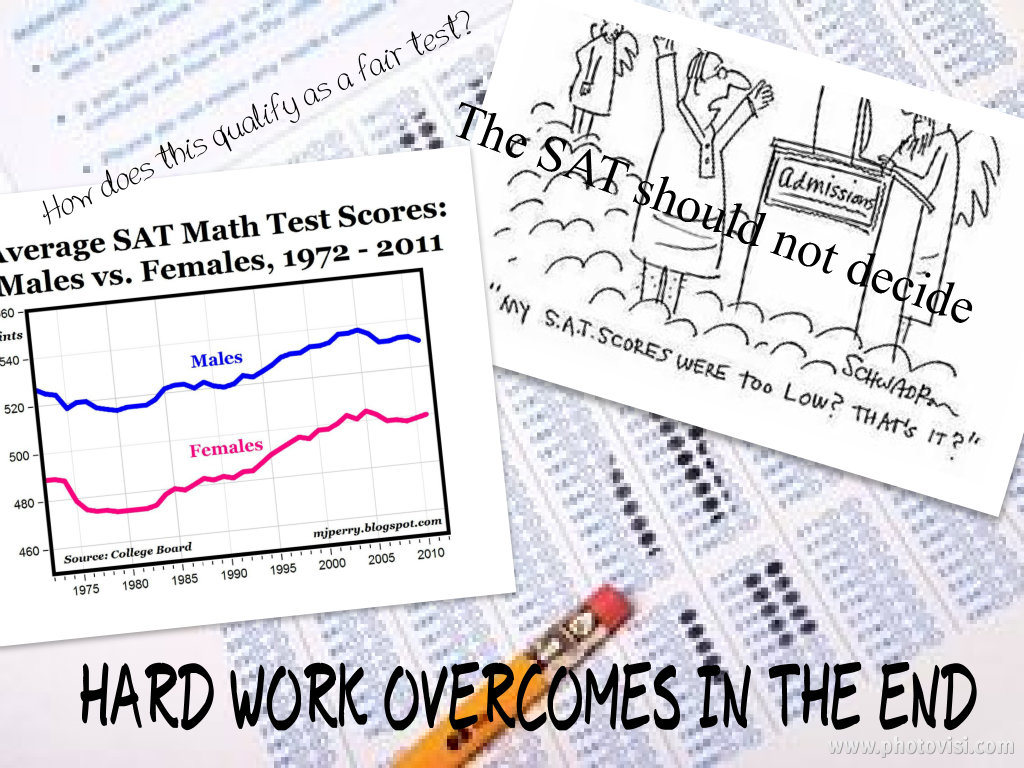
I have used the app as a poster alternative.  The example above is a poster of a student’s persuasive topic.  I think Pic Collage can be used for any class or grade level.  Being able to access images from the web enables students to research and show their understanding of any topic in a new and inviting form.

Whether it is for the classroom, or a collection of photos from Thanksgiving, I think you will enjoy Pic Collage.  Share your collages with me via Twitter (jdog90).

Leave a comment

Filed under Education, Student Work, Technology

Announcing App Series

When I was in high school our school purchased a new technology that was going to change how the classroom worked.  We could now pause, rewind, and even jump to certain parts of a film.  I don’t remember which year it actually happened, but we moved from film projectors to VHS and Laser disc players.

In college I had a class that covered how to troubleshoot overhead projectors, VCRs and other technologies we might encounter in the classroom.  The objective was to be able to quickly handle situations so that instruction time was not disrupted.

These technologies didn’t really change anything.  Yes, we loved movie day in English class.  It was interesting to see how they changed the story and we would have discussions about how we “saw” the character versus the actor in the movie. But I would often doodle or write poetry during instructional films in Chemistry. Which might explain why I got D the first quarter, but did end up with a solid B by the end of the year. What changed was simply how we watched film.

Jump forward with me to today.  Using an idea from Malcolm Gladwell, I think we are at a “tipping point” in Education.  Mobile devices are the catalyst for this change.  I don’t think this is going to happen today, or even next year, but I sense the change.  And I think it will take one bold school in this area to start the change reaction.  What education might look like after the tipping point is for another blog.

This blog is to announce that next week I am going to do a five post series on specific apps for mobile devices that personify the fun, creative, and educational aspects of mobile devices. If you want to get started on investigating the apps for yourself, below are the days and apps with links to their sites.

Monday: Pic Collage (and photography in general)

Tuesday: SCVNGR (gamification)

Wednesday: Snapguide and Tagwhat (sharing what you know)

Thursday: Coursebook (creating your own course of learning)

Friday: Aurasma (augmented reality)

Join me next week to learn more. You never know what new ideas might be generated.


Leave a comment

Filed under Education, Technology

Grumpy Teacher

I think it has happened.  I am a grumpy teacher.  Many of my phrases start with “Back in my day,” or “Kids these days.”  To be honest, some days I feel drained after teaching instead of energized.  I get grumpy grading papers.  I am becoming that teacher.

How did I get here?  The answer is not easy to write, but I think it reveals some important aspects of education.

My Classroom

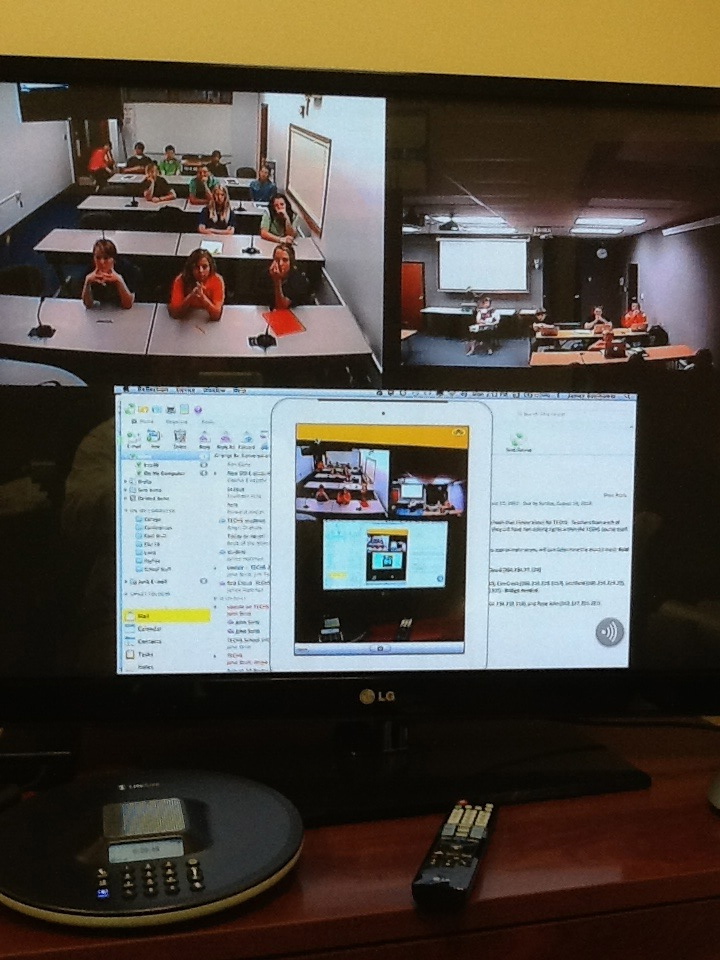
I teach all my classes over a DL (distance learning) system.  I juggle different start and end times for periods, 14 different school calendars, and one period with six different schools on the screen.  Not to mention technological issues or other factors that affect the environment of the class: lighting, all students on screen, and even just trying to answer a question from their computer screen.

I have, at best, shallow relationships with my students. I’m on line with them three days a week for 45 minutes.  I don’t get to have those conversations in the hall or at lunch.  They cannot ask for help in the morning.  I do not get to see the light bulb moments.  Learning is about moving to higher levels of understanding and articulation of that understanding.  It is scary to make that jump sometimes, but a teacher is that foundation that gives students the courage to make it.  I don’t seem to be building that foundation, and that is hard to live with because that is what a teacher does.

Connected to the environment is my approach to grades.  Lessons are just as much a part of the culture of a classroom as the desks and paint on the wall.  And with lessons comes grades.  I have tried to create a more project-based environment for both of my classes.  To create activities that builds the students’ skills without worrying about the grade.


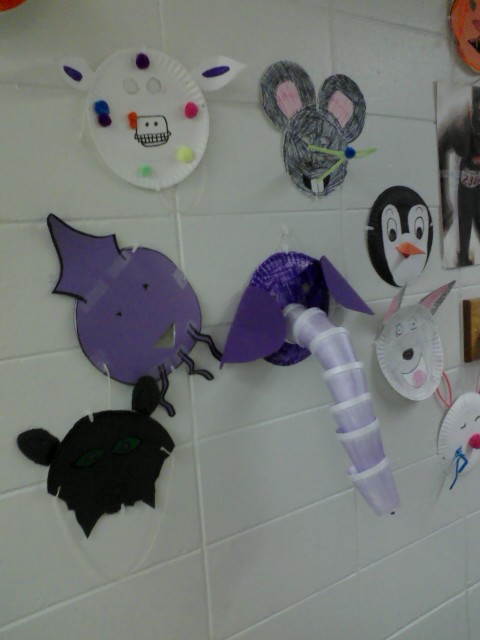
Animal masks from when I taught in a classroom.

Here again I get tired of battling all the different grading issues, from the student cliché. “How long is it suppose to be?” to justifying every assignment that is not “graded” to schools.  In some ways I have made it even harder on myself because I’ve tried to run my DL classes as if it was a normal classroom.  So, I have kids go outside to write and take pictures.  Students hand in homework by taping it to the walls in their classroom.  But it is not so simple to correlate these activities with six other schools for that period.  Or to make sure all students post their work on the wall.

Grades are important, but I feel that improving their skills is more important.  Life doesn’t give us a midterm report.  We don’t get a grade for how well I did as a parent, or as a friend.  Yes, we do get evaluated for those things, but it is reveled in our sense of pride, the smiles and laughter at the dinner table.  Our skills help us create a life filled with love and strength to handle rough times.  I know a single classroom cannot measure up to life, but it can be a place to build the work ethic for students to strengthen the skills that will be needed in life.  I would rather see them work hard on an essay then filled a page requirement, but to create that freedom takes a relationship that is built throughout a school experience.  And I’m just some guy on a screen…

So I get tired, I get grumpy, I feel like a failure. But this feeling highlights what matters most in education and in life: the relationships we construct with students to help them reach their highest expression of talents and skills.  I might still be grumpy, but I know that all I can do is keeping trying.  Because I won’t get a grade for this moment in life, but will know how I’m doing by the smiles and pride my students express in their own life.

Leave a comment

Filed under Uncategorized

The Easy Path

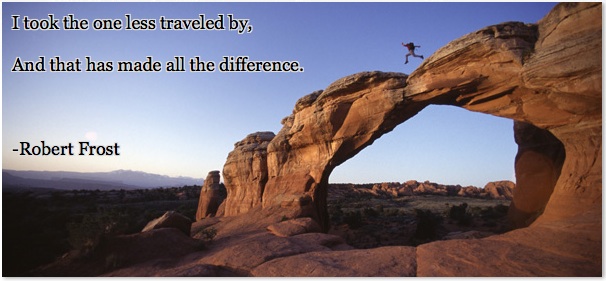
Robert Frost once wrote, “Two roads diverged in a wood…”

I wish life was that simple.  That each day was layout in two paths and that was it.  I’ve discovered that throughout a day we are given many opportunities or roads to travel.  But maybe Frost meant something deeper.  That there is always an easier path, and that path is more traveled by.


Tough Road Home

Everyday we are given the opportunity to choose our road, the easier path or the other.  The other path can lead anywhere and can be in any condition.  It can be a battle that leaves us bruised at the end of the day.  On another day that road is a walk in the park and we are filled with joy.  But the uncertainty of the outcome scares us and we shy away from choosing that path, especially if we have traveled that road and it has been a battle for too long.

So, we will choose the easier road.  That path is familiar to our feet.  No matter what the day might bring we can get through it by walking this road.  The day may not be fulfilling. It might irritate us, or stress us out, but it is easy.  It is a passive path.  It allows us to do almost nothing as the world moves on around us.  We know we could have done more with the day.  There is emptiness to the scenery, we don’t have to think, we don’t have to risk anything.  No failure, no heartache. Just a nagging emptiness that we don’t seem to mind because of the easiness of the walk.

But we find out, sometimes too late, that the road is a dead end.  A vacant lot filled with what ifs that blow across our hearts like tumble weeds.  The other path, for all its uncertainty, is the path we know we should choose.  No matter the wear of the road, or the obstacles, or sunshine streaming through the trees, this road leads to deeper fulfillment of our lives.  It is not always easy, but it leads us to a life of achievements, a life without regrets.

So we have another day before us.  There is an easy path through this day.  There is also the opportunity to do what it takes, no matter how difficult or different roads we end up walking to achieve a day we are proud of.

Designed at PicLit.com

Leave a comment

Filed under Uncategorized

Bullying

“On Wednesday, Amanda Todd’s body was found in her home, police in the Vancouver-area city of Coquitlam said. She took her own life.

She was 15.”

The quote comes from the article,  “Bullied Canadian teen leaves behind chilling YouTube video” written by Lateef Mungin, CNN on October 12, 2012.

My oldest son turned 12 in August.  As a dad I worry about bullying.  About the mind field that schools can be.  Last night at dinner my oldest daughter, who is in second grade, shared how she lost a friend during recess.    Second Grade! And we are dealing with friendship drama.

I know that friendships have cycles to them.  That growing up is not easy.  Discovering our talents, strengthen our beliefs, dealing with peer pressure.  These are things we deal with throughout our lives.  But how did it get so deadly?

What can I do about it?  What can anyone truly do about it?

The first step is the most important. Create a classroom environment that is safe.  We can’t change “the world” but we can change our world.  As a dad, as a teacher, I can only be a buffer against the cruelty of the world.  I am the role model of behavior, of strength, of what it means to be a person of character.  No one will ever be perfect, but as a dad and an educator I have an important job beyond the books or the paycheck: to show by living out the greatest aspects of this life.  It’s not easy, and I have failed too many times.  But no child, no son or daughter, no person deserves to be treated so bad that life has no meaning anymore.

The second step is education about digital citizenship.  For all that technology can do to enhance our lives, it brings out the darker side of society to our screens just as easily.  What was once written in the bathroom stall is now broadcasted on Facebook.  Thousands on YouTube now view a humiliating stunt at lunch. A mistake is not forgotten in this digital age.  Digital citizenship needs to start in elementary school right along with sharing and fair play.

The third step is to make a stand in some way before things get bad.  Our stories, our expertise, our smiles can be a catalyst for a student.  Last night I finished the book, “Season of Life,” a part of the story is about Joe Ehrmann’s program called Building Men for Others and it’s effect on the Gilman football program.  It is about the “why” of life.  And as a dad and a teacher (and when I was a coach) I have the blessing to share that why with my family and my students.  We all do.  We all should because without a deeper foundation the cruelty of life can crush any of us.

Here is a list of sites to find more information.

Stop Bullying

The American Foundation for Suicide Prevention

CNN “Speak Up”

1 Comment

Filed under Education, Family, Life