Snapguide is designed for users to create visual based how-to guides. That’s it. Sounds simple. It is and that is what makes it great. The guides are built around teaching how to do something through pictures and videos. Adding text is a part of the process, but you are limited to 200 characters a page. Once your guide is finished you publish it to Snapguide’s site, then you can share it through other social media sites. Guides can also be viewed on their website, but can only be created through the app.
Why I like it:
It is easy and fun to make a guide with your mobile device. One night I decided to make a Snapguide about one of my family’s favorite dinners, Pizza Sandwiches (click to see the Snapguide). So, I grabbed my iPad to take the pictures as I cooked, then designed the guide later that night.
Another bonus to the app is the Snapguide community. You can investigate other guides, or follow someone who makes guides covering subjects your are interested in. Be prepared to interact through the comment option with people who like your guides.
Use in the classroom:
I have a Process essay unit for my writing class. I showed the students Snapquide as an option to create a “visual how-to” assignment (the students had a number of options). Three students used Snapguide. Below are their guides.
Each guide was viewed at least 500 times. Each had at least 50 loves. And each got at least one comment. This is the power of creating work that connects beyond the classroom.
The other side of Snapguide is finding guides to enhance what you are doing in class. There are guides that could be used in art class, industrial arts, or music. Just browsing through the categories will spark ideas for you.
Snapguide’s focus is to allow users to make and find great step-by-step guides. It is a great example of how we can share our knowledge with people who also enjoy our interest. Using Snapguide is a great way to enhance any lesson that is centered on how to do something. Share your guides with me via Twitter (jdog90).
Series Note: I decided to use Tagwhat in the upcoming website series that I will be doing in December.
Pic Collage is a fun, easy, and powerful app to create collages. It allows you to access photos from your camera roll, the web, Facebook, or take a picture from the app. The app comes with a standard set of stickers, with the option to buy more sets. You can add text, colored borders, and even crop your photos by tracing around the section you want. You can even send your collage as a postcard for $1.99.
The finished collage can be shared on Facebook, Twitter, and Tumblr. You can also save it to your photos or send it in an email. Pic Collage now has an account option that allows you to share your collages on Pic Collage’s site.
Why I like it:
Designing the collage is easy. Rotating, resizing, arranging, and even trimming the photos are gesture based. In no time you can create a nice looking collage. The ability to access images from the web makes the app a creative tool for the classroom.
Created by Kaylee, English Comp student.
Use in the classroom:
I have used the app as a poster alternative. The example above is a poster of a student’s persuasive topic. I think Pic Collage can be used for any class or grade level. Being able to access images from the web enables students to research and show their understanding of any topic in a new and inviting form.
Whether it is for the classroom, or a collection of photos from Thanksgiving, I think you will enjoy Pic Collage. Share your collages with me via Twitter (jdog90).
When I was in high school our school purchased a new technology that was going to change how the classroom worked. We could now pause, rewind, and even jump to certain parts of a film. I don’t remember which year it actually happened, but we moved from film projectors to VHS and Laser disc players.
In college I had a class that covered how to troubleshoot overhead projectors, VCRs and other technologies we might encounter in the classroom. The objective was to be able to quickly handle situations so that instruction time was not disrupted.
These technologies didn’t really change anything. Yes, we loved movie day in English class. It was interesting to see how they changed the story and we would have discussions about how we “saw” the character versus the actor in the movie. But I would often doodle or write poetry during instructional films in Chemistry. Which might explain why I got D the first quarter, but did end up with a solid B by the end of the year. What changed was simply how we watched film.
Jump forward with me to today. Using an idea from Malcolm Gladwell, I think we are at a “tipping point” in Education. Mobile devices are the catalyst for this change. I don’t think this is going to happen today, or even next year, but I sense the change. And I think it will take one bold school in this area to start the change reaction. What education might look like after the tipping point is for another blog.
This blog is to announce that next week I am going to do a five post series on specific apps for mobile devices that personify the fun, creative, and educational aspects of mobile devices. If you want to get started on investigating the apps for yourself, below are the days and apps with links to their sites.
My oldest son turned 12 in August. As a dad I worry about bullying. About the mind field that schools can be. Last night at dinner my oldest daughter, who is in second grade, shared how she lost a friend during recess. Second Grade! And we are dealing with friendship drama.
I know that friendships have cycles to them. That growing up is not easy. Discovering our talents, strengthen our beliefs, dealing with peer pressure. These are things we deal with throughout our lives. But how did it get so deadly?
What can I do about it? What can anyone truly do about it?
The first step is the most important. Create a classroom environment that is safe. We can’t change “the world” but we can change our world. As a dad, as a teacher, I can only be a buffer against the cruelty of the world. I am the role model of behavior, of strength, of what it means to be a person of character. No one will ever be perfect, but as a dad and an educator I have an important job beyond the books or the paycheck: to show by living out the greatest aspects of this life. It’s not easy, and I have failed too many times. But no child, no son or daughter, no person deserves to be treated so bad that life has no meaning anymore.
The second step is education about digital citizenship. For all that technology can do to enhance our lives, it brings out the darker side of society to our screens just as easily. What was once written in the bathroom stall is now broadcasted on Facebook. Thousands on YouTube now view a humiliating stunt at lunch. A mistake is not forgotten in this digital age. Digital citizenship needs to start in elementary school right along with sharing and fair play.
The third step is to make a stand in some way before things get bad. Our stories, our expertise, our smiles can be a catalyst for a student. Last night I finished the book, “Season of Life,” a part of the story is about Joe Ehrmann’s program called Building Men for Others and it’s effect on the Gilman football program. It is about the “why” of life. And as a dad and a teacher (and when I was a coach) I have the blessing to share that why with my family and my students. We all do. We all should because without a deeper foundation the cruelty of life can crush any of us.
I have been thinking about Ralph Waldo Emerson’s speech “The American Scholar” lately. The speech is a part of the American Literature course I teach in the spring semester, and it is one of my favorite pieces of literature. I agree with so many of the points he expresses about true scholarship.
I wonder what he would think about the state of education today? At the beginning of the speech Emerson reveals the three main influences in a scholar’s education. The first is Nature. Simply stated, being outside. Emerson goes much deeper in his speech, but the idea is that scholars spend time with Nature, spend time reflecting, as he states, “And, in fine, the ancient precept, ‘Know thyself,’ and the modern precept, ‘Study nature,’ become at last one maxim.”
I have been trying to conduct my DL classes as if I was in my own classroom, and so my CCC writing course went outside to write. I instructed that they could take pictures, too. As students will do, they had some fun:
Burwell Students
Then this morning 1011 News reported about Kearney public school’s “Outdoor Days.” Don’t get me wrong; I think this is a really good idea. But what does it say about the norm of our education, that having kids outside learning is news? Emerson states this is the first thing that influences scholars. Yet, we set up learning to be done inside, during the best time of the day and in rows.
The second influence is the “mind of the past” that at his time was best reflected in reading books. We know that today that influence is even greater. I won’t spend time on this point because my thoughts have been on the fist influence, Nature, and the last influence…
Created at PicLit.com
Emerson makes a strong argument that true learning is done in living, “Of course, he who has put forth his total strength in fit actions, has the richest return of wisdom.” He states that we can only truly understand that which we live, that true scholarship is produced through our lives. Emerson states, “Character is higher than intellect. Thinking is the function. Living is the functionary. The stream retreats to its source. A great soul will be strong to live, as well as strong to think.”
I show this clip of Neil Gaiman at the beginning of the CCC writing course, listen to what his first piece of advice is for writers.
In my position I am immersed in technology, but I also see our students immersed in technology to the point that I do wonder if they understand the beauty and heartache of living. Or are they just skimming the surface of life one statues update at a time? I believe technology and especially mobile devices can enrich our lives deeply. But that has to be the focus for the use of technology. It should be a tool we use in living. Living is our greatest teacher, “Time shall teach him, that the scholar loses no hour which the man lives” (Emerson).
I have been thinking about Emerson’s speech, “The American Scholar,” lately. I wonder what he would think about the state of our educational system?
Routine isn’t bad. It provides a sense of security and understanding on how life works. My children do better when we keep to a routine. Even in my classroom, I noticed when I arranged my desk in rows there were less issues to deal with. The sun comes up, the sun goes down; nature has its routine.
But all routines have a beginning and an end. As my kids grow their routines change. The desks in my room had to move to fit different lessons. The time when the sun rises and sun sets change everyday.
When do we change?
Why don’t we change?
The first iPad sold on September 17, 2010 (just two years ago). In the ESU 10 area we have at least eight schools with 1-to-1 iPad programs this year and at least another five looking at going to 1-to-1 programs next year. Not to mention all the schools that have iPad labs. iPads are just an example of the rapid shift happening right now in our world. There is change happening in schools, but we are still driving on the same road.
We have been on this road for so long that we don’t even consider pulling over at a rest stop. We put the school on cruise control and head toward graduation. Even if there is construction, or a bad storm, we have always arrived at our destination.
Courtesy of Flickr user Jared Zimmerman.
But there are many roads we can take. And reasons to take them. The first step to change is recognizing that the road we are on may not be the best one for us.
Because I am afraid the kids are sleeping in the back to pass the time…
Saturday was the first day of our club championship. This was the third year I have played in it. The past two years I finished last. I was determined not to finish in last place this year. All summer my scores ranged in the high 40s and low 50s for 9 holes. I got my first new driver, ever. My game was doing OK. I was excited to play this year.
Well, the first nine was a disaster. I shot a 61. My inconsistent play got me into trouble on a couple of holes, scoring a 10 and a 12. I improved on the back nine, but not much. I shot a 57 for a first day score of 118. Last place.
I headed home feeling pretty low. I had hit some nice shots and even had a par. But I was again in last place. I had another day to play I told myself. Sunday would be better.
Sunday was a new opportunity. I had three pars, hit some incredible putts and made some nice shots. But I shot a 61 on the front nine and a 58 on the back nine. 119. One shot worse then Saturday. Last place again.
At that moment, I wanted to quit. I had been playing for 20 years and had improved very little. I practice. Especially the last couple of years I have had a practice session almost every week. Maybe I’m just not good at golf and am wasting my time.
As I drove home today, it hit me how much I sounded like a student. I started to remember students who would say the same thing in my class when presented with new material, or a deeper concept. I remember one student who would balk at anything creative. They would state that they weren’t creative, and it was too hard. Or the times working through rough drafts of essays and hearing time and time again, that the student wasn’t a good writer. I would do my best to break through the mindset, but I don’t know if I actually did get through for some of the students.
What really got me this weekend was the way I felt about myself. How my students might also feel about themselves. I know that my self worth is not measured by my handicap, but that didn’t change the way I felt as I drove home. Last place. Everything felt like last place. How do my students feel about themselves when they struggle, when they say “I’m not good at this.”? Are they experiencing that same irrational, but ever present connection to their self-worth? I bet they are, and keeping that in mind could help generate a new approach when a student wants to quit.
Last week I had a great opportunity to conduct a workshop with Central Community College professors.
My oldest son went to the driving range with me on Saturday and my second son was my caddy on my last round of golf.
My wife and I took our two little girls grocery shopping with us on Thursday and we took the three oldest kids back-to-school shopping on Friday.
Some days at work I spend the whole day on one project, and yes sometimes it feels like I am playing with a new toy.
What do all these examples have in common? Time.
The professors commented that they never got the time to actually work on things. Something I also hear from teachers at workshops.
As a dad and husband, nothing says “I love you” like spending time with family.
As I have mentioned before, my job gives me time to explore new tools to use in my classes or to show to other educators.
Time.
Time is used differently in school, especially high school. It is separated into chunks by the ringing of a bell. And every teacher has had that bell interrupt a great lesson.
Everyday life makes us feel frazzled at times. I can feel exhausted at the end of a day when I don’t actually get much done. The worst part is that my attitude can then affect the rest of the family in a negative way, and if I’m not careful it becomes a habit for the household.
Time.
Life takes time. Learning takes time. People need our time (especially those we care about the most). We all get 24 hours in a day. But do we use those hours for the best? Time for our students to think? Time to share a joke at the dinner table? Or to just sit with the person you love and watch the sky fade to night, happy with how you spent the time given to you?
Reading the book Too Big To Know, by David Weinberger, was one of those moments that helped me see something I already knew in a slightly different light and that sparked a whole new train of thought. I love these moments.
The book is a look at how the Internet is changing the view of knowledge. I highly recommend the book, but I want to discuss the most obvious point from the book. Abundance.
Courtesy of Cornell University Library from Flickr
As David Weinberger points out, we have had an abundance of information for a long time. Have you read every book in your local library? Have you read every book you have bought or downloaded? Neither have I. What the Internet does is make that abundance faster and in different forms: articles, videos, apps, music, and opinions.
School is out for the summer, so I’m going to approach this idea from a dad perspective. Through this example I hope to express how abundance can be a great thing for learning.
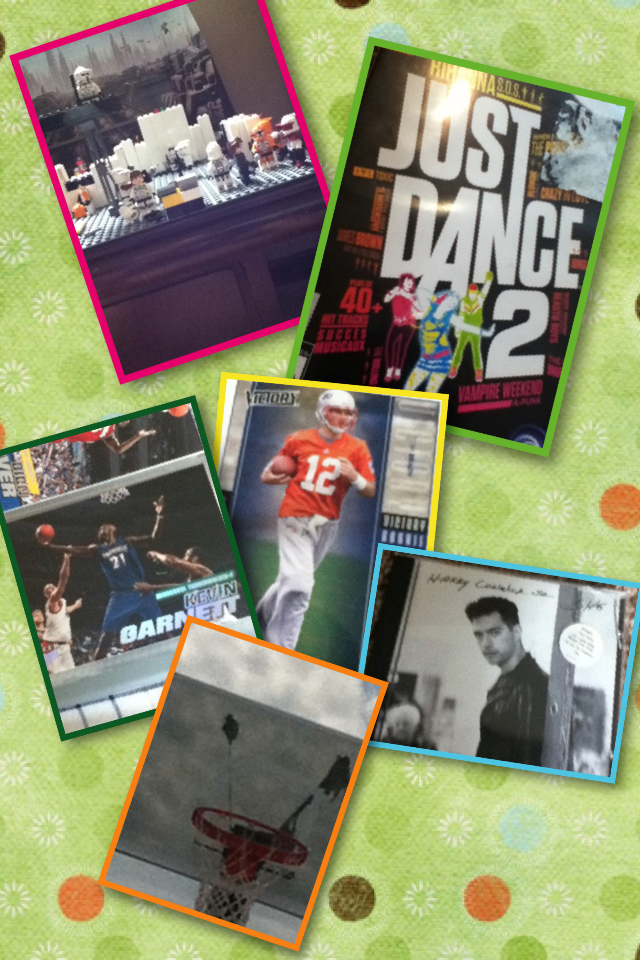
Question, what does “Wake Me Up Before You Go-Go,” the 2012 Eastern Conference Finals, Yoda, and a Tom Brady rookie card have in common? Answer: My sons and how they come to find interest in things.
My two sons are 11 and 9 right now. And because of the abundance of the Internet and technology, I have been having a blast sharing my interest with them. One example is music. Right now my oldest son is into Harry Connick Jr. and 80’s music, while my other son is listening to the songs “Good Life” (One Republic) and “Believe” (Cher). They use Grooveshark to create playlists to dance to, or to have as background music as they play animal tag with their sisters.
My oldest son’s interest in 80’s music comes from the video game series, Just Dance. His interest in Harry Connick Jr. comes from the movie, Dolphin Tale, which Harry Connick Jr. has a role in. I have some of his CDs, but my son has been checking out other CDs from the library.
When my second son bought his iPod, I put some music on it he might like. The music on his iPod has grown from his own interest and suggestions from me. One of our favorite songs is “Closer To the Edge” by 30 Seconds to Mars.
We cheered on the Celtics (I am a Kevin Garnett fan) in the Eastern Conference Finals together because of trading cards and the NBA 2K11 video game. My second son’s favorite basketball player is Shawn Kemp, who he has only seen play on YouTube videos and the video game. He does have a few of Shawn Kemp’s trading cards.
We watched the Super Bowl because they have a Tom Brady rookie card. I’m a Minnesota Vikings Fan, last season was a tough one.
They don’t like everything I share with them, but what is incredible is the ability to share aspects of my life with them. And to share the original content, not just a story. My music collection is not unpacked yet, so I use Grooveshark to share a song they might like. Then if my second son wants the song we can buy it from iTunes. When my oldest son got the part of Winthrop in TheMusic Man last September he used YouTube to study the role.
The abundance we have can be a powerful aspect to our lives. Yes, there are some negatives, but that is for another blog post. My sons’ and I are building strong connections because we can share and experience life in a completely different way than before. History is important and powerful. Shawn Kemp is my son’s favorite player. He has never seen him “play.” But he knows a lot about him, plus he understands the history of the Oklahoma City Thunder (who he is cheering for in the finals because they use to be the Super Sonics) because of his interest.
When embraced, this abundance we have can allow us to naturally learn anything that interest us. It can build connections; between people, between today and yesterday, and even between who we were and who we can be, because it allows us to explore and investigate life in ways we couldn’t before. It gives me an opportunity to be a better dad, to be able to enrich my children’s life with more than just stories. I can share my history sometimes in its true form today.
I remember when “Wake Me Up Before You Go-Go” was a hit in 1984 and have shared stories from that time in my life with my boys. Today, the song is just as important because it makes us excited when it is one of the songs for the dance battle on Just Dance 2 (yes, I have won on that song a couple of times).
A Pic Collage of Interest
P.S. My second son made the collage this morning at home while I am at work. Connectedness, but that benefit of technology is another blog post.
Saturday morning I was working on cleaning the kitchen, getting recycling organized, cleaning counters, stuff like that. The house was in full child mode, the older three were downstairs doing something that made a thud every few minutes. The two youngest girls were in the recliners, movie on but their attention on the books in their laps. My wife was getting ready for the day.
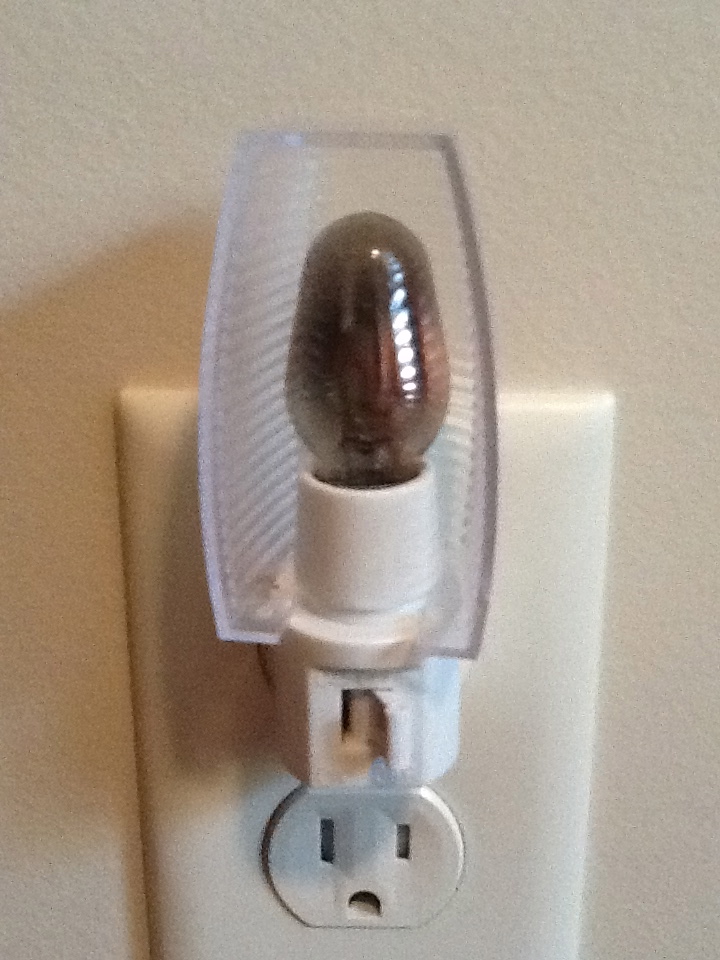
I had started on the clean dishes in the dishwasher when my second son said, “Dad, I hit my nightlight and now all the lights downstairs don’t work.”
What?, I thought. And I felt the knee-jerk reaction of parental frustration start forming in my head with the words already on my lips. I don’t know why, but sometimes life gives us a moment to learn from, and I gave myself a few moments to think by saying, “OK, what happened?” in a calmer tone. Just under the frustration a thought had pushed through, if I wanted my son to continue to talk to me when things happened, when he might have made a mistake, then I had better pay attention to how I handled this situation.
By bumping his nightlight he threw the breaker for that part of the basement. Not a big issue, I switched the breaker back on and changed the light bulb in his nightlight. Problem solved. But I haven’t always handled simple situations with calm; too many times that knee-jerk frustration sets the tone for that moment. I realize I need to change that habit. If my son has a problem and he gets negative responses from me every time, even before I have figured out what is going on, then he will simply stop coming to me for help. I don’t want that to happen.
We teach people who we are by our habit of response. And they will act accordingly. As I thought about how we influence students I thought of one of the most patient and strong colleagues I have worked with, Mrs. Moss at Centura. Every morning she was helping students with math problems. Every morning! They knew she would be there for them, they could ask their questions and know she would help them. Mrs. Moss’ habit was to smile and say, “Let’s look at that problem.”
I hope to be as good of a teacher and parent as Mrs. Moss, to create a habit of response that lights the way to a positive reaction to the situation instead of a knee-jerk negative comment.

 Overview:







 It is all Connected