Category Archives: Education

Foundation of Leadership

As life would have it, an idea has been reinforced through what I have been reading, watching, and trying to do in my life. The idea can be expressed best this way:

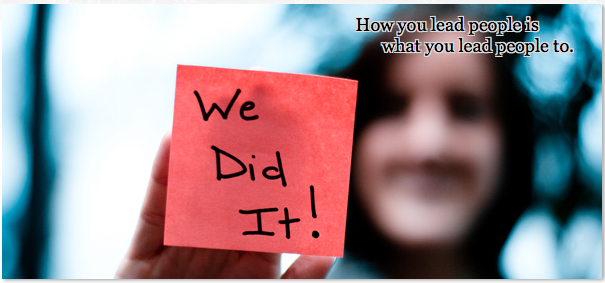
How you lead people is what you lead people to.

This idea is not about getting results. It is not about how to get people to buy in to an idea. It is about the foundation of leadership. In our life, our jobs, we find ourselves in leadership roles. As a teacher and coach, but also as a husband and father, this idea has gotten my mind thinking about how I am doing things. So, what does the idea mean?

HOW we lead is the foundation we build FOR the ones who are following us. The foundation for our family, our students, or teams.

If we use fear, or negativity to lead, the foundation we build for others will be passivity, resentment, and at times rebellion.

If we are unorganized or disengaged, people will feel lost and isolated. They will not connect to the vision you have, no matter how grand it is.

If we lead with love, clear guidelines, and respect… we lead people to that. They will feel connected, feel they matter, and will have the strength to handle the rough times.

Yes, a part of leadership is results. I know that. Having an 0-8 football season last year has created a challenge for me. And results are one of the ways we measure how well we are doing. But results will vary in life. Foundations are how we handle those variations.

Made with PicLits.com.

Made with PicLits.com.


Leave a comment

Filed under Education, Family, Life

A Digital Path

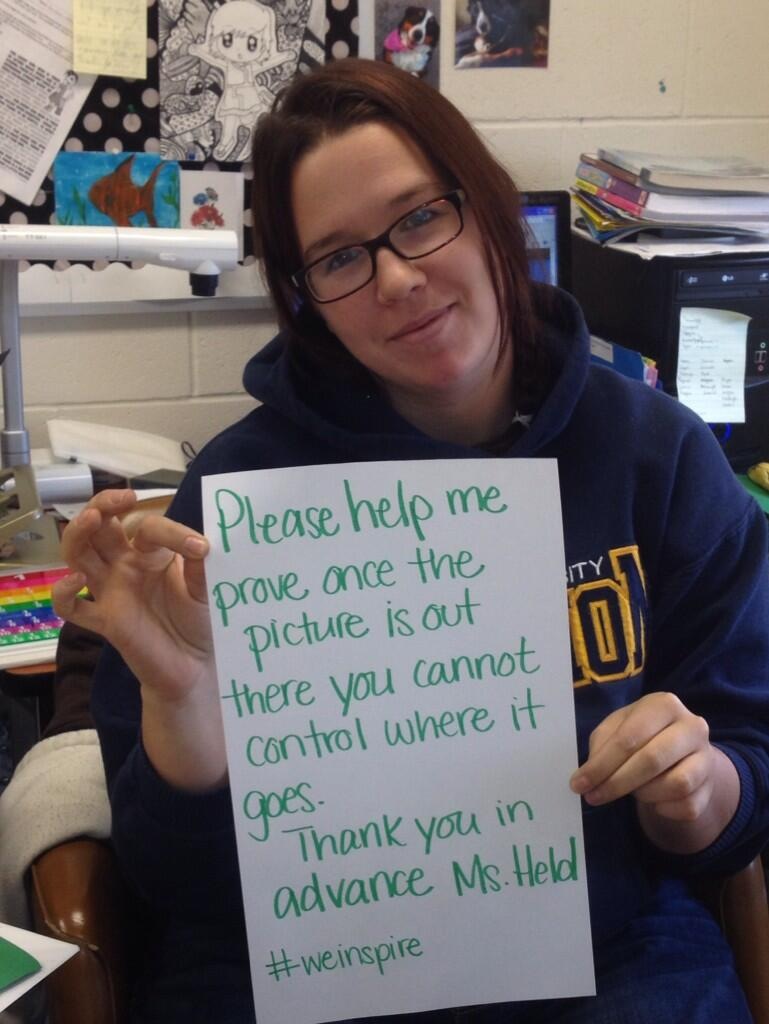
IMG_2890 “Please help me teach a valuable lesson to the 7s retweet/favourite/share whatever 🙂 #weinspire #cybersafety pic.twitter.com/Mwfqxd0wQj” Tweet from Home of 7AH.

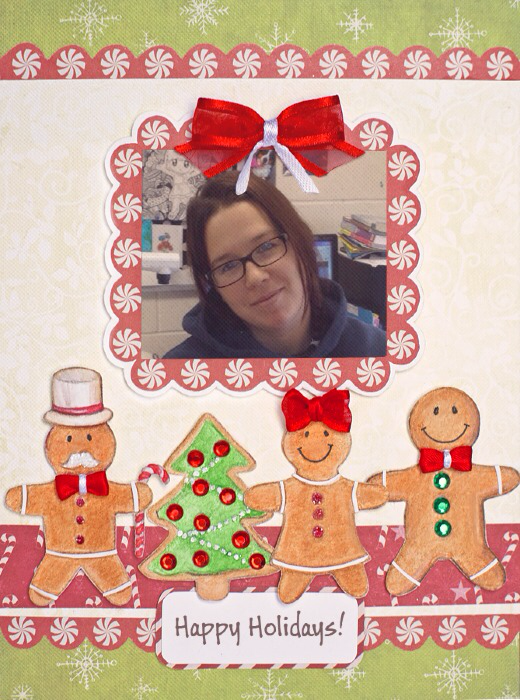
Well, lucky for you I am also a teacher… but I could be anyone behind a keyboard.  Your picture is now apart of a blog post from an individual in Nebraska, US. I have not manipulated the photo, but I could.  Photoshop is an amazing tool… oh wait I did alter the photo…IMG_2892

In fact, I used a simple app…PhotoFunia.


Consider for a moment the unknown that happens with anything we produce digital… from a picture, to a tweet, to the information of our lives that we share. Home of 7AH, I hope this blog post spurs some interesting discussions. I also hope it generates a few seconds of thought for everyone before you go digital with anything… who knows what will happen to that moment.


Leave a comment

Filed under Education, Life, Technology

What happens when a connected teacher loses the connection?

A normal hurdle in our connected lives is home Internet service.  For the last three days our Internet has been down.  And life has been different.

First, we have been spending more time together in the living room.  The older kids still had their mobile devices, but mostly to listen to music or to read.  My oldest daughter has been spending time working on her first graphic novel, the boys have been taking turns holding their new sister, and the two other girls have been running sprints to the front door.

Mom and dad have been intertwined into the activities.  I am the official starter for the sprints. The girls line up next to me and I say, “Go, Go, Go!”  Mom will make sure the boys hold their sister’s head right.  And we all check the newest panel in our daughter’s project.

The disconnect has allowed us a chance to reconnect during this busy time.

But being disconnected has its drawbacks.

First semester is the time I teach the Eng. 101 class.  The students use Moodle to turn in everything.  In the best circumstances, I am always just a little behind in grading.  The students write almost everyday.  I am now days behind in just that class.  I have work to do to just get caught up.

My other classes use Schoology, and I have kept up through the app on my phone.

Photo by former student Angelica.

Photo by former student Angelica.

But when the rest of our world stays connected, we have a digital mountain to climb when we reconnect with them.  We have emails to read and respond to, tweets and status updates to respond to, and for teachers, piles of digital papers to grade.

We might have come to the point that we cannot function well without being connected.  And that idea is for another blog.

A technician is headed to our house this morning to fix the problem.  And I will be back to grading papers late into the night. And tweeting during my breaks, of course.

2 Comments

Filed under Education, Family, Life, Technology

National Honor Society Speech

Post Note: Last night I was honored to give the opening remarks for Centura’s National Honor Society Induction Ceremony.  The following was my outline, my speech added some lines, forgot others, but the main idea is presented.

IMG_1210Good evening,

I am honored to speak at this year’s National Honor Society service.

Tonight I would like to talk about dictionaries.  I know, I’m in English teacher; give me a little leeway.

I actually want to talk about a metaphorical dictionary. (A metaphor is a direct comparison, usually indicated with the word is… a simile uses like or as)

This metaphor comes from Ralph Waldo Emerson’s Speech “The American Scholar.”  His speech covers a number of different topics regarding learning, but one of his most powerful moments is when he expresses that “Life is our dictionary.”  He continues later in the speech with this insight, “I learn immediately from any speaker how much he has already lived, through the poverty or the splendor of his speech.”

Emerson is stating that we fill our lives, our dictionary, with the vocabulary we experience.  I want to expand on his idea for a few moments.  To investigate what words you already have in your dictionary and discuss the power of the words you have yet to write.

First, you already have a number of great words in your dictionary.

Your family is the base of many of these words.  Love, joy, sister, brother, mother and father.  They have developed the word family for you.  Your family has helped in understanding words like Christmas, vacation, pride.  They have helped define you… by giving you your name, and reinforcing the power of your middle name when you were in trouble.

Your teachers and coaches have also helped you write in words like education, learning, hard work, goals, and tardy.

But moments like this night reveal a truth, a change in the dictionary.  You are in the process of rewriting the definitions, of adventuring out to live your life, to write your own entries.

In the future you will enhance the entry for family. You will be the mother or father, an aunt or uncle.

You will take the entries of education from school and build the entry for wisdom.

But to be honest, a dictionary is not, and should not be simply filled with positive words.  Life is not that simple.  Do not be afraid to write in words like heartache, fear, or anger.  These are compliments to a life that risked loving someone with all your heart.  Fear shows you strived to do something out of your comfort zone.  Anger means you cared.

You will have words like regret, but that means you have dreams or goals.

You will feel overwhelmed, stressed, confused, and even lost.  But those words are part of life. They give weight to your life.  They give meaning to our moments.

This moment allows us the time to reflect on our dictionaries, to enter new words and tweak the entries that we have written.  Understand, that your life, your dictionary is always a work in progress.  And that you take a metaphorical pencil with you and strive to fill your dictionary with new words every day. Tonight you should work on the entries of Scholarship, Leadership, Service, and Character but also happiness, family and friends, education and most of all honor. Congratulations.

1 Comment

Filed under Education, Family, Life

Whatever happened to Georgia Wonder?

Back in 2009 I was following a band Georgia Wonder on Twitter. I was also teaching a unit on digital literacy for my sophomores. I had a crazy idea to try to connect with people I followed on Twitter to enhance some of the topics we were covering in class. One of those people was Julian Moore of the band Georgia Wonder. He agreed to talk to my sophomores via iChat to talk about the music business.

Here is the online magazine my students produced from that lesson: Chalk: Georgia Wonder issue.

Here is the blog post Julian wrote: Nebraska USA.

But this post is not about that lesson; it is about relationships. Relationships in our digital age.

Julian and I hit it off right away. In fact we both have the same birthday. For quite some time after the iChat lesson we kept in contact on a regular bases. Georgia Wonder was working on a new album, and in fact the class and I got to hear the first single from the album as Julian was working on it. Today it is 2013 and I have lost contact with Julian. There have only been two posts on Twitter from the band since last year. Their blog has not been updated in a long time. Julian is working on a novel, but that blog has not been updated either. So what happen to a friendship in the making? Life.

Let me take a minute to bring in a few ideas that have been on my mind lately. In the TECHS class we have been discussing digital citizenship, and part of that discussion has been the change in our definitions of friendship, communication, and relationships. Yesterday we watched the following TED talk “Alone Together” by Sherry Turkle.

I have been reading the book You are not a Gadget by Jaron Lanier, which discuss many of the same ideas. This blog isn’t about those either.

Now this is a hard truth. I know that if I stopped using Twitter or Facebook, nobody would really care. Somebody might think off hand that I hadn’t posted anything in awhile, but life would go on. I will be starting a new job soon and in a few months after I leave ESU 10 somebody might think about me, but life goes on. But here is the point, the aspect we as a culture and as individuals are discovering and working through; life goes on whether we are online or not. (And I am thinking we need to be offline a little more… but that is for another post) But when we embrace the power to enhance our relationships through technology we create an incredible personal experience that enriches what we do and who we can become. At the moment much of technology discussion feels like technology is a separate aspect to our lives. It is not; it is a tool that can enrich our lives.

So what does this have to do with Georgia Wonder? Good question. I may never connect with Julian again, but the possibility is there because of technology. But just like any friendship, job, or change, life goes on. But my life, and my students’ lives, was enriched by our connection. If we keep the focus on how technology can make our lives better; I think we will do just fine.

By the way, Georgia Wonder, if you get the chance to read this… I’m still listening to your music.

Leave a comment

Filed under Education, Life, Technology

Class Research

The TECHS students did a simple Google Presentation on future technology. Each student, across four class periods, were assigned to find something cool happening in the world of technology.

Technology allows any of us to collaborate with ease.

Leave a comment

Filed under Education, Student Work, Technology

“I do it.”

Clip art courtesy of ryanlerch at openclipart.org

This morning my youngest daughter was getting herself dressed. She was having a little trouble with one of her sleeves. Like many parents, my wife said, “Come here, I’ll help.”

Our daughter look at her said, “I do it.”

She continued to struggle to get the sleeve untangled and her hand through the sleeve.  She turned a couple of times like a dog chasing its tail. After a minute she stopped and said, “Need help.”

My wife then helped her get her arm through the sleeve and we continued with our morning routine. The time in between “I do it” and  “Need help” was probably at the most a minute. But in parental time it felt like an hour, especially since we were in the middle of our morning routine.

My youngest girl is a classic strong-willed child. She will tackle any thing she feels like. If this was any of my other four children at this age they would have let us help them get their arm through the shirt right away. We would have justified helping them for the sake of our routine.

It is easy to do things for our kids. Whether they are our own kids or our students. My oldest son is now 12 years old and we are asking him to take on more responsibility. But I wonder if I have simply taught him that dad will do it.  For example, for years I have cleaned the dishes from the table after dinner.  It is easier for me to handle the mess than have a child carry a plate with some uneaten macaroni and cheese on it and have the possibility that the child dumps the food on the floor. Or take their glass, with just a little bit of milk at the bottom, to the counter.  But now that I want my son to do more, there are moments of frustration because he forgets to put his plate in the dishwasher.  But I have done it for him for twelve years.

This morning my three-year-old daughter reminded me that building any foundation takes a lot of time and energy. It might be easy to do things for our kids for the sake of time or ease. But the foundation will not be there when it is needed most in life. When we are not there.

3 Comments

Filed under Education, Family, Life

Plateau?

I was talking to my colleague Deanna Stall when she brought up an interesting point. She asked, “What if the system has plateaued? That this is the best that we can expect from school.” Good question.  It got me thinking about all the talk about changing school, from Sir Ken Robinson’s TED Talk “Bring on the Learning Revolution” to the book I am currently reading by Salman Khan, The One World Schoolhouse. One of the main points about education is how it must change, that it is broken.  But maybe Mrs. Stall’s question is more accurate.  Let me talk about the bench press first.

Not to get into the principles of conditioning, but I want to use the bench press to highlight the idea of a plateau. The bench press is a great exercise. But if you do the same rep set or keep the same weight everyday, you will soon hit a plateau in your development. The easiest way to break the plateau is a change in reps, weight, or the training cycle.  Change something, not stop doing the bench press.

School is a great place. Teachers work hard to provide an education for every child.  Activities, from sports to FFA to a school play, provide unique opportunities for students to express their talents. There are too many positives about school that get lost in the discussion of change.  Many times it feels like the discussion is centered on the idea we trash the whole system and start over.  But what if we think about it from the position of the plateau?

Change is growth, but the change is in the approach not the foundation.  An athlete will not stop doing the bench press when they hit a plateau; they change their training.

The question for a school, or even a teacher, is what to change to reach the full potential of the school or the classroom.  What can we change to break through the plateau?  Because the worst part of a plateau is the false perception that it is the best you can do…

1 Comment

Filed under Education

Aurasma

Overview:

Aurasma Lite allows you to create and view augmented reality tags, or Auras as they are called, in the world around you. The app allows you to create your own tag with premade Auras provided in the app (Aurasma animation, images or 3D models), or leave your own photo or movie file from your photo stream.

There are two options for making an Aura with the app, regular and local (published in a channel). A regular Aura is usually connected to an image that you place the Aura on.  You can then share that Aura through social media or email.  When someone clicks on the Aura link they can see your tag if they have the same image. A quick example would be leaving an Aura on a newspaper photo.

A local Aura is placed in a physical location.  This is great for creating tags for schools, or museums.  The difference is that the user makes a channel to share the Auras left at that location.

Aurasma also has a studio to create layered Auras.  The picture in the “Why I like it” section will give you an example of how the studio works.

Why I like it:

Steps to View:

1.Download the Aurasma Lite app.

2. Create an account.

3. Search for  “Jamey Boelhower ” with the search option and subscribe to my channel.

4. Point mobile device at the picture below to activate the Auras. Double tap the video to go full screen, tap the A to go to Aurasma’s site, and tap the Twitter icon to see my profile. Video was made with ScreenChomp.

Try to have iPhone in the full screen, might have to move your device to start the Auras.

Use in the classroom:

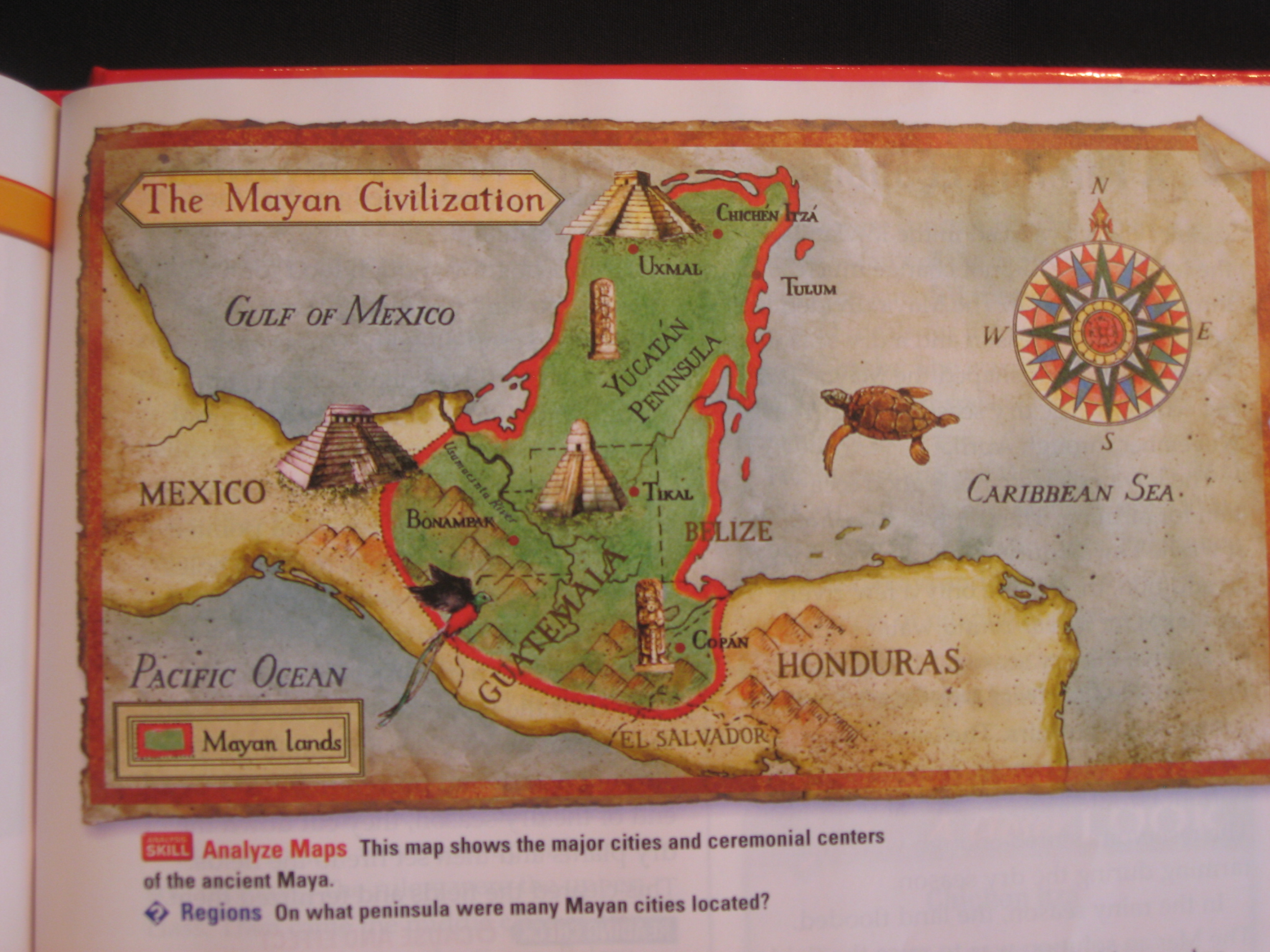
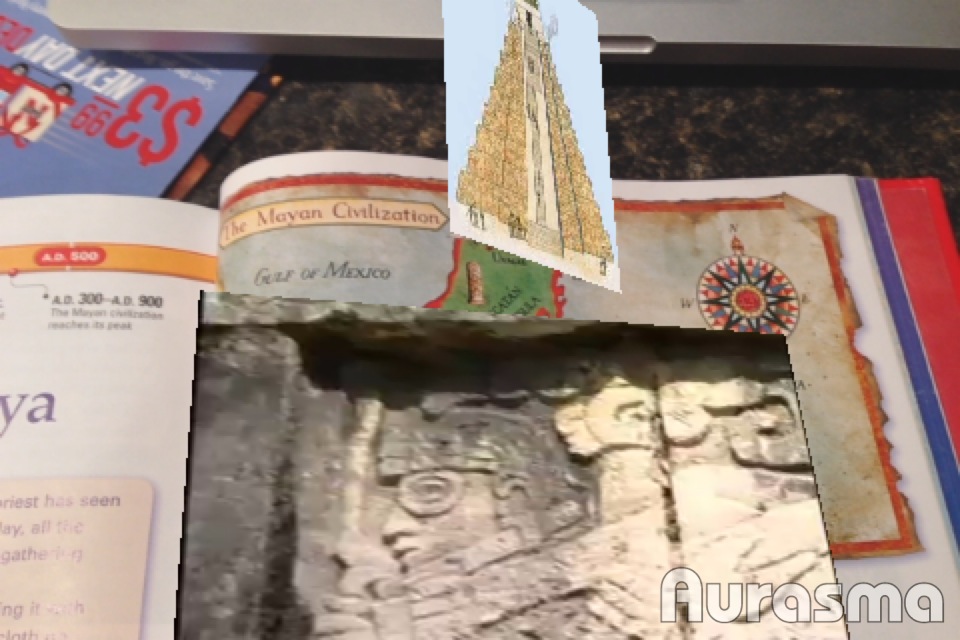
I think the power of Aurasma for educators is in the studio creation of Auras.  Below is an example of content I have tagged in a social studies book.

Map of Mayan Civilization

Auras include video and picture of temple.

Like the location Auras, the studio allows you to have a channel that you can update at anytime.  You can leave instructional videos, websites, and other material tagged in traditional books.  Many students use the calculator on their phone to do math problems, imagine, though, that they can review a lesson because it is tagged to an image in their textbook.

Using the app to create Auras can be a great way to make posters or bulletin boards interactive in the classroom.  Students can make review videos for books and leave Auras on book covers.  There are some many ways to use Aurasma in the classroom.

Share your ideas with me via Twitter (jdog90).

Leave a comment

Filed under Education, Technology

Coursebook

Overview:

Coursebook is a personal video textbook.  Coursebook features videos from Ted, Khan Academy, Stanford eCorner, Yale, Railscasts and other educational sources.  You can also connect your Facebook and Linkedin accounts to see what your friends are studying with Coursebook.


Why I like it:

Coursebook is a simple idea, but designed so well that it is easy to get lost in learning.  The idea is to build your own learning path by selecting videos to watch.  Coursebook then keeps track of what you have watched, which ones you have tagged to watch later, and even which videos you have started to watch. The app then gives you recommendations based off your course work.  You can share your videos through Facebook and Linkedin; also you can share with the Coursebook community.

You can access your course work on their website, too.

 Use in the classroom:

This app is perfect for flipping your classroom or enhancing your curriculum.  At the moment Coursebook is just over two years old and you can’t just type in any keyword and get video results.  But I see great potential in what they are developing, and it can release the ownership of learning to the student.

For example lets use the study of cells in a high school class.  How can Coursebook be used in this situation?

First, I did a keyword search with “cells” and Coursebook provided 11 results.  The top three videos are “Using nature to grow batteries,” “Transplant cells, not organs,” and “Printing a human kidney.”  What an interesting way to enhance information about the importance of cells in our life!  What if there was a day or a project in the science class that allowed the students to connect the classroom lesson with a video of their choice?

OK, now let’s expand that science class to the whole year.  The student can build a coursebook with videos of their choice for the whole year.  If there were videos you wanted to use in your class, you make sure all students add it to their playlist.  This is the power of the flipped classroom idea.  It’s not about just watching a video, but about watching something that sparks the students’ imagination and you, the teacher, providing them the freedom and time to work with their ideas and questions.  With Coursebook the videos can be watched anytime and anywhere, the classroom is where you take that spark and ignite their learning.

Share your ideas with me via Twitter (jdog90).

Leave a comment

Filed under Education, Student Work, Technology